

That band of tightness across your shoulder blades has a way of showing up around 2pm and staying there. You roll your shoulders, you press a thumb into it, maybe you get a good crack out of your chair, and twenty minutes later it's back. Upper back tightness is one of the most common things people mention to me almost in passing, usually while I'm working on something else.
The good news is that it's rarely a sign of damage. It's usually a position problem, and positions are fixable. Here are the stretches I hand out most for it, plus what makes them actually stick.
Why your upper back gets tight
Think about where your arms live all day. At a keyboard, on a steering wheel, holding a phone, they're out in front of you. That position keeps the muscles between your shoulder blades in a long, loaded position for hours while the muscles across your chest sit short.
At the same time, the joints of your mid-back, the thoracic spine, barely move. That part of your spine is built to bend and rotate, and most of us ask almost nothing of it from morning to night. Stiff joints surrounded by tired, overworked muscle is exactly what "tight" feels like.
So the fix has two parts: give those joints some movement, and give the short muscles some length. That's what the following stretches do.
If what you're really fighting is a rounded, hunched posture rather than a specific knot, the shoulder mobility routine for desk posture is the better place to start. This post is for when your upper back specifically feels tight and you want it to let go.
Before you start
Ease in and stop short of pain. A stretch should feel like a firm pull that eases as you breathe, not something you have to brace against. Hold each one for 20 to 30 seconds unless noted, breathe normally, and don't bounce. If anything sends pain, numbness, or tingling down your arm, stop.
Six stretches for a tight upper back
- Chair-back extension. Sit in a chair with a firm back, lace your fingers behind your head, and gently arch backward over the top edge of the chair so your mid-back extends over it. This directly reverses the hunch and is the single best one on this list. Three slow reps, holding a few seconds each.
- Open book. Lie on your side with knees bent and arms stretched out in front of you, palms together. Keeping your knees down, open your top arm across your body like turning a page, following your hand with your eyes. Let your chest rotate toward the ceiling. Five to eight slow reps each side.
- Upper trapezius stretch. Sitting tall, take one hand over the top of your head and gently tip your ear toward that shoulder. Let the opposite shoulder relax down. You'll feel this along the side of your neck into the top of the shoulder.
- Levator scapulae stretch. Same idea, but turn your head about 45 degrees, as if looking into your armpit, then gently draw your chin down. This targets the muscle that runs from your neck to the inside corner of your shoulder blade, which is often the exact spot people point to.
- Child's pose with a side reach. From kneeling, sit back onto your heels and walk your hands forward. Once you're settled, walk both hands over to one side until you feel a stretch along the opposite side of your ribs and lat. Hold, then switch.
- Foam roller extension. If you have a foam roller, lie back over it positioned across your mid-back, support your head with your hands, and gently extend backward over it. Move it an inch or two up and down your mid-back and repeat. This is the most effective way to restore mid-back extension at home.
How often, and for how long
Little and often. Two or three short rounds spread across the day will do far more than one long session in the evening, because you're interrupting the position before it sets in rather than trying to undo eight hours of it at once.
Most people feel some release immediately. Lasting change, where the tightness stops showing up every afternoon, usually takes a couple of weeks of consistency plus a change to whatever is causing it.
What else actually helps
Stretching alone tends to be a treadmill. These are what turn short-term relief into it staying gone:
- Move before you're stiff. Get up every 30 to 45 minutes. The best stretch is the one you do before the tightness arrives.
- Raise your screen. If you're looking down at a laptop all day, your upper back is fighting your setup, and it will win.
- Strengthen, don't just stretch. Rows, band pull-aparts, and wall angels build the muscles between your shoulder blades so they can hold you up. Tight often means weak and overworked, and stretching a weak muscle only buys you an hour.
- Use heat. For muscular tightness, heat before you stretch makes the stretch more comfortable and more effective. The NHS has straightforward guidance on heat, movement, and neck tightness that applies well here.
Because the neck, upper back, and shoulders all work together, this tightness often travels with the forward-head posture behind text neck. And if you're stiff up top from sitting, the same hours are usually working on your lower back too, which I covered in lower back pain from sitting too long.
When it needs a closer look
Upper back tightness is usually mechanical and responds well to movement. But get it assessed if it isn't easing after a couple of weeks, if it keeps returning no matter what you do, or if it comes with pain radiating into your arm, numbness, tingling, or headaches. Those point to something more specific than a tired muscle, and guessing wastes time.
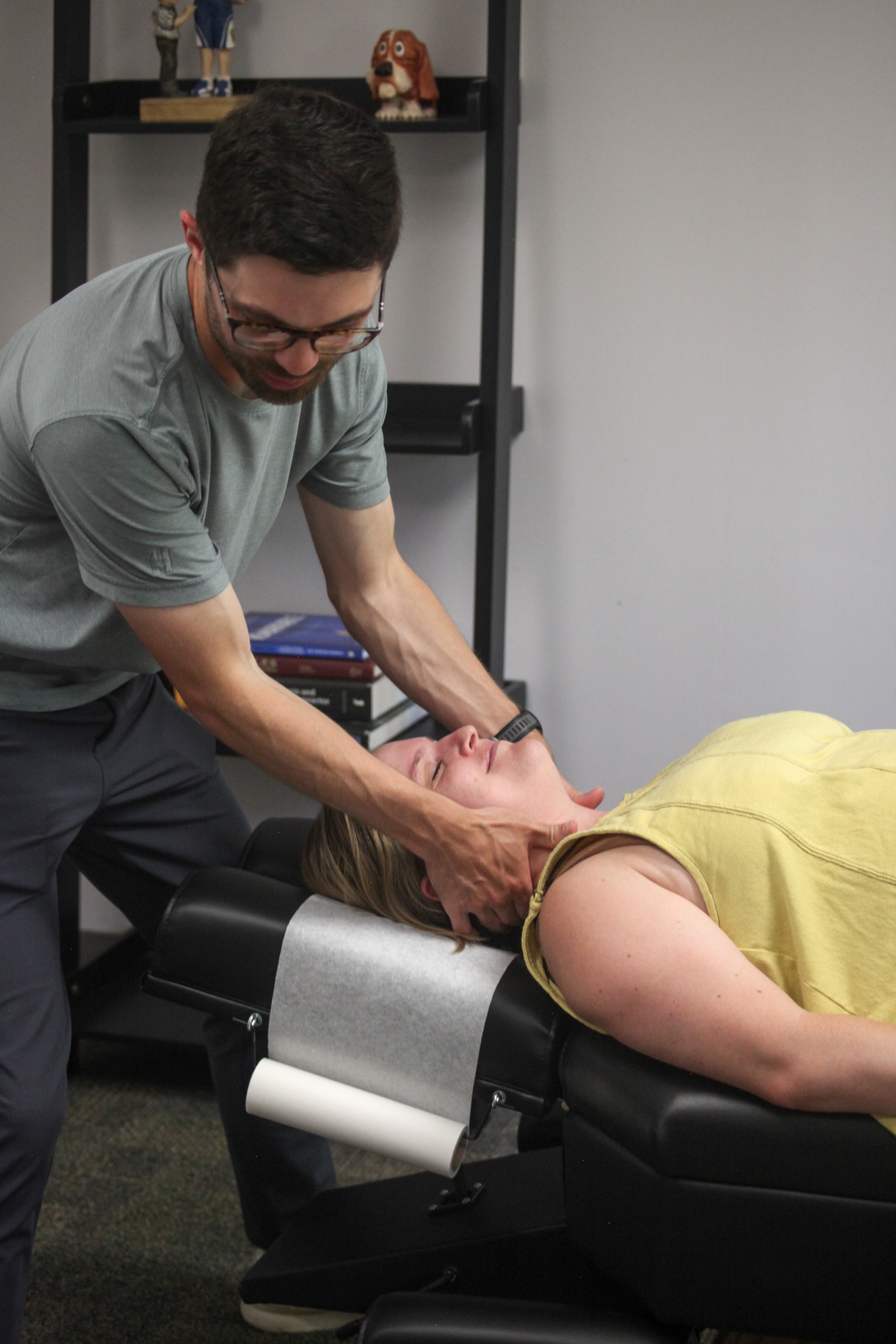
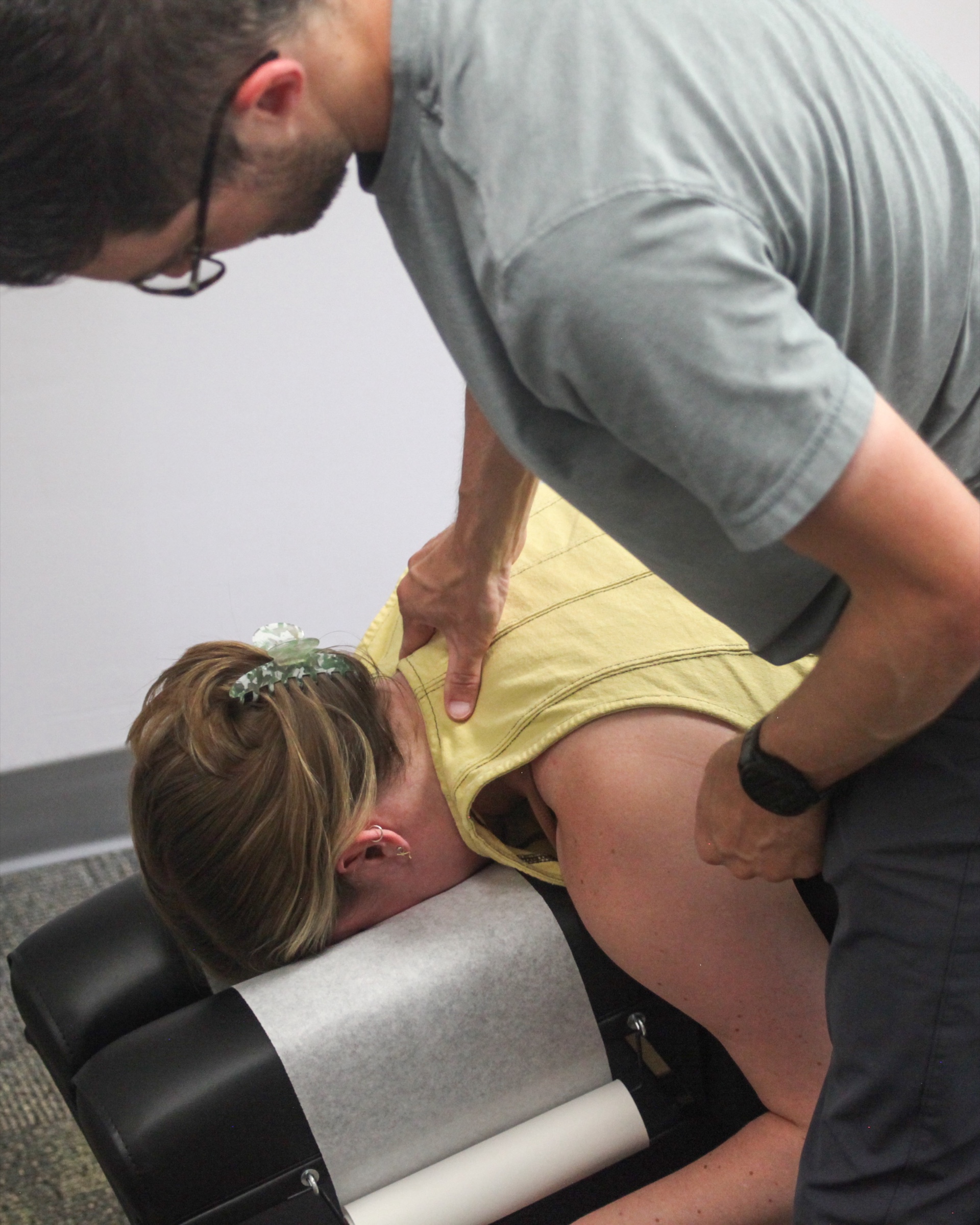
At Tarry Chiropractic in Lenexa, I'll work out which joints aren't moving and which muscles are doing too much, then treat it and give you the two or three things that will actually keep it away. Give us a call at (913) 400-2014 or book online and let's get that knot to let go.