

If you spend your day at a keyboard, your posture takes the hit. By afternoon your shoulders have crept up toward your ears, your upper back has rounded forward, and a familiar knot has settled in between your shoulder blades. That slumped, rounded look is classic desk posture, and a short shoulder mobility routine is one of the easiest ways to undo it. The whole thing takes about five minutes.
This is the companion to my desk worker stretches for lower back pain. Same idea, different end of the spine: a few gentle moves you can fit into the workday to keep sitting from stiffening you into a hunch.
Why desk posture rounds your shoulders
Typing and looking at a screen quietly pull everything forward. Your shoulders roll in, your upper back hunches, and your head drifts ahead of your body. Hold that for hours and a tug-of-war sets in: the muscles across the front of your chest tighten and shorten, while the ones between your shoulder blades get stretched out and weak. Over time that imbalance stops being a position you're holding and starts being the posture your body defaults to, even when you stand up.
The fix isn't sitting like a statue all day, which nobody manages anyway. It's making movement a habit throughout the day and building tolerance to the positions your work environment requires of you. It's giving your shoulders the opposite movement often enough that they don't set into the hunch. That's what this routine does.
Before you start
Move slowly and gently. Hold the stretches for 20 to 30 seconds, keep your breathing easy, and never force a position. You're aiming for a comfortable stretch and a bit more range, not a fight. If any move sends pain, numbness, or tingling down your arm, stop and see the last section.
The five-minute shoulder mobility routine
Six moves, about five minutes. Here's each one, and what it's doing for you.
Shoulder rolls
Roll your shoulders up, back, and down in slow circles, about 10 times, then reverse. A simple warm-up that gets everything moving before you stretch.
Doorway chest stretch
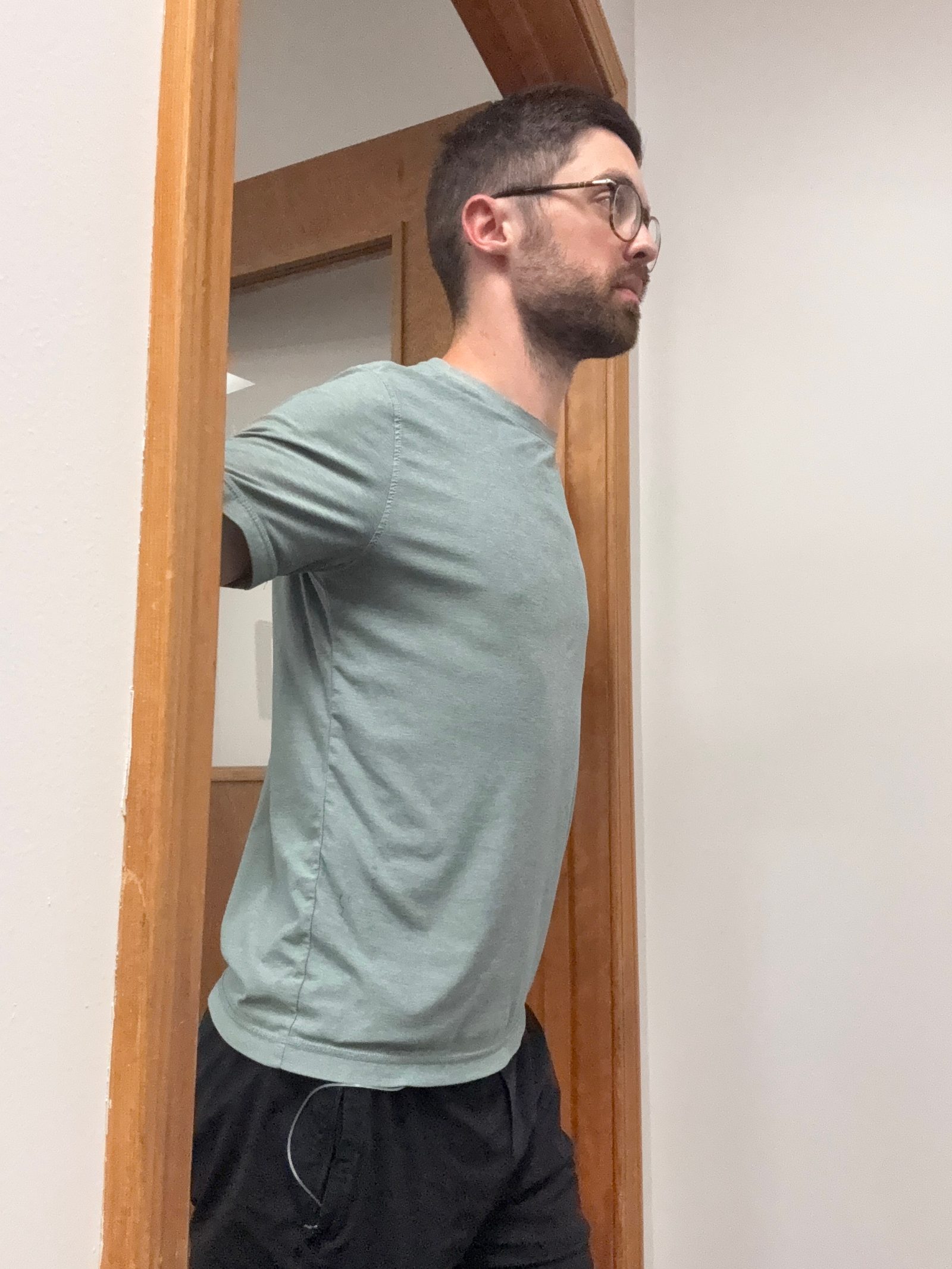
Rest your forearms on either side of a doorway and step one foot through until you feel a stretch across the front of your chest and shoulders. This opens up exactly what sitting tightens, and it's the single most useful move on this list for desk posture.
Thread the needle
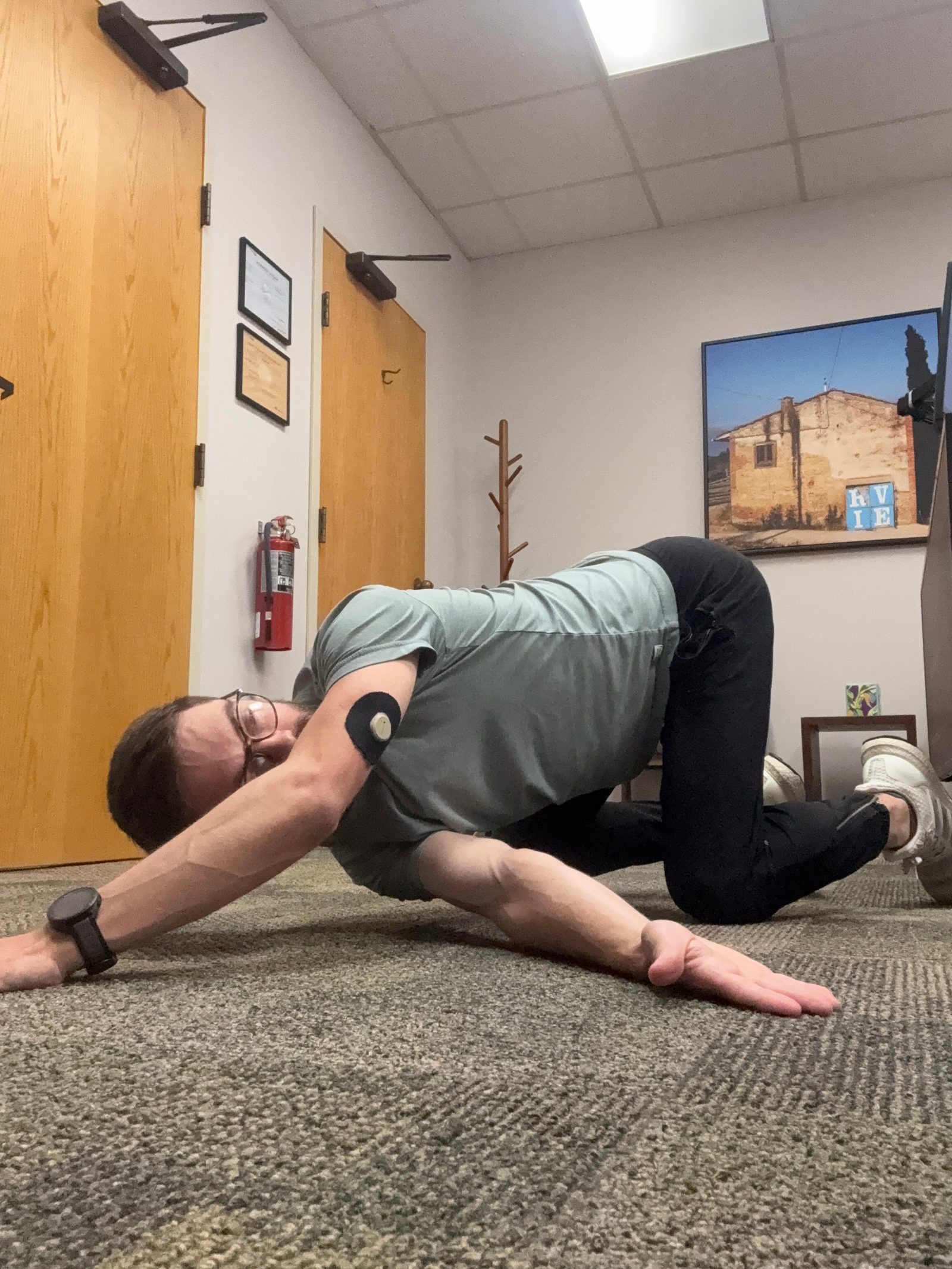
On all fours, slide one arm underneath your body and rotate gently through your upper back, letting that shoulder lower toward the floor. Great for the mid-back stiffness that builds from hunching. If it's a specific knot between your shoulder blades you're chasing, I have more targeted stretches for upper back tightness.
Wall angels
Stand with your back against a wall and slowly slide your arms up and down like you're making a snow angel, keeping your arms and back in contact with the wall. This wakes up the muscles between your shoulder blades that switch off at a desk.
Cross-body shoulder stretch
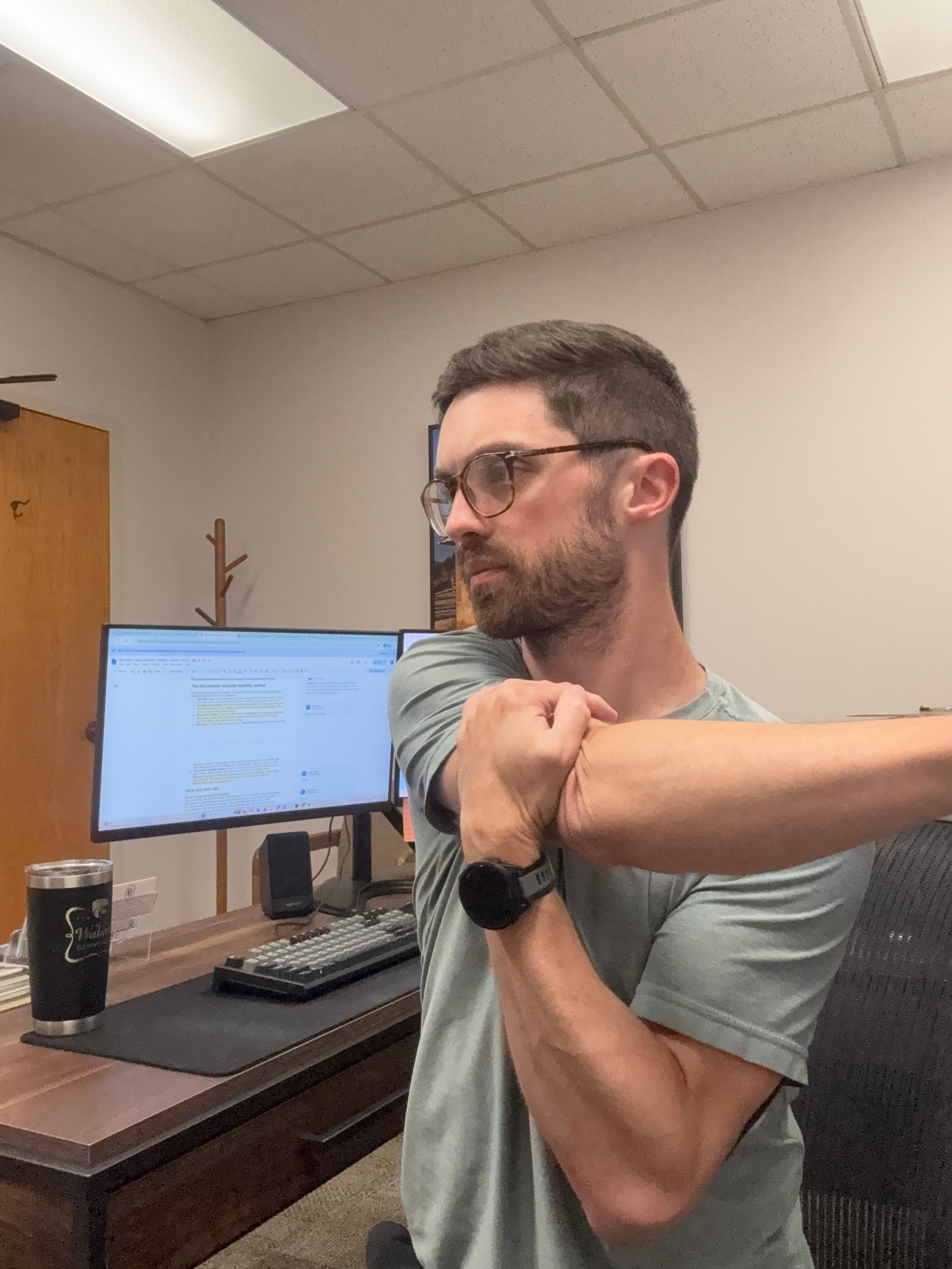
Draw one arm across your chest and gently hold it in place with the other. Simple, and it releases the back of the shoulder nicely.
Chin tuck
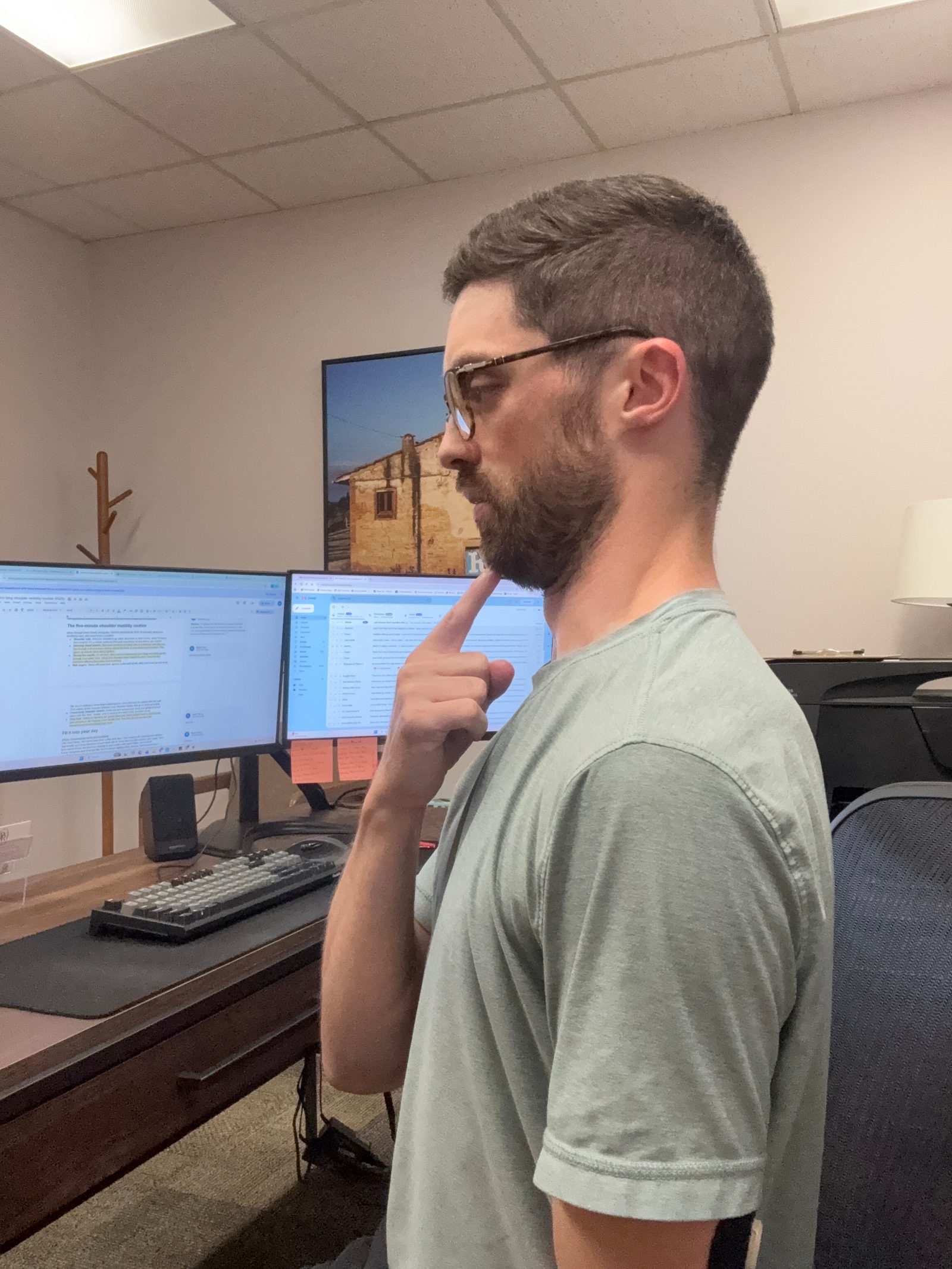
Sitting or standing tall, gently draw your head straight back to stack it over your shoulders, like making a soft double chin. This one directly counters the forward-head posture behind text neck.
A simple order to follow
Not sure how to string them together? Run through it like this, once in the morning and once to break up the afternoon:
- Shoulder rolls, 10 forward and 10 back, to warm up.
- Doorway chest stretch, 30 seconds each side.
- Thread the needle, 30 seconds each side.
- Wall angels, 8 to 10 slow reps.
- Cross-body shoulder stretch, 20 seconds each side.
- Chin tucks, 8 to 10 reps, to reset your head position.
Make it stick
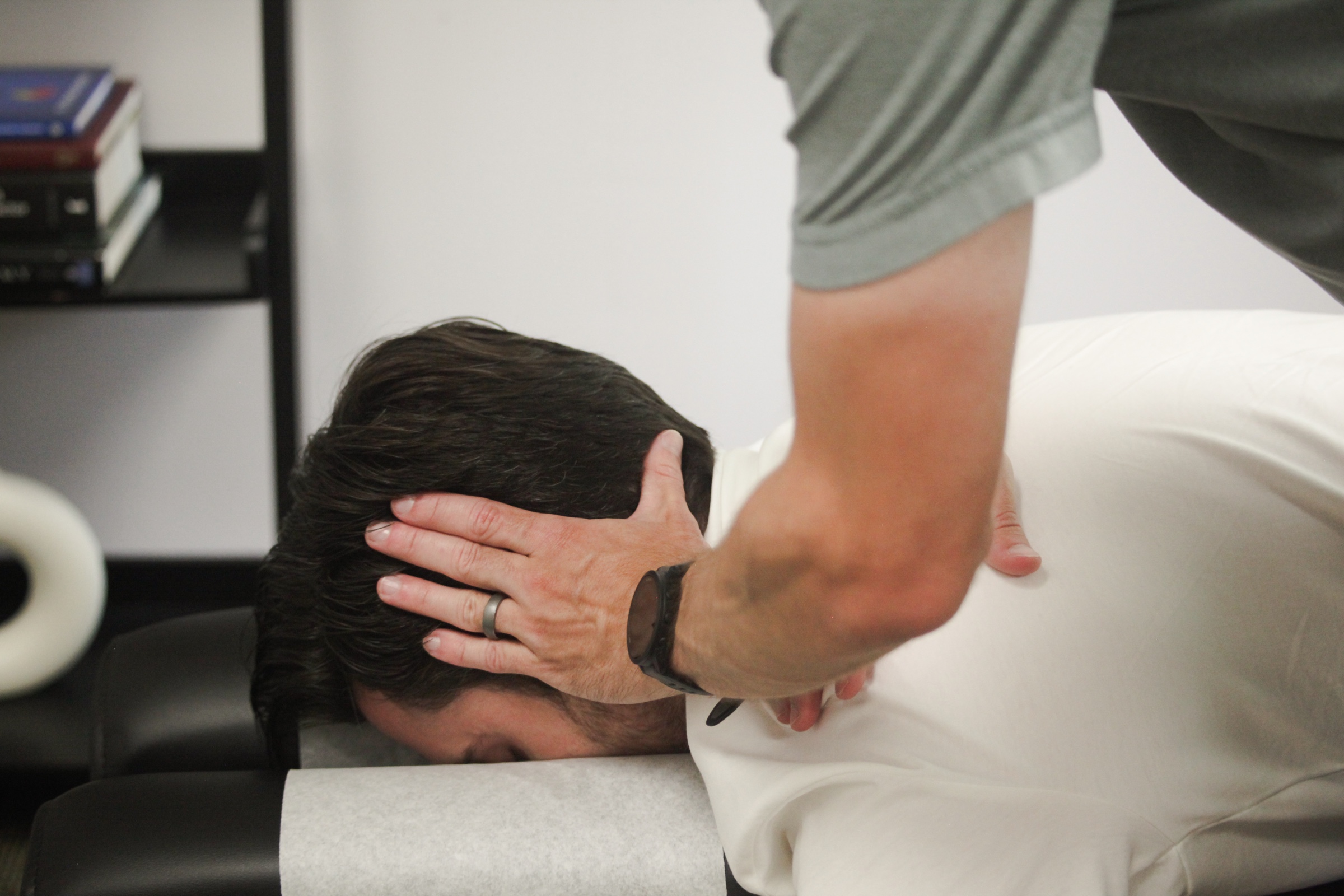
Like most things, this works best done a little and often. One round in the morning and another that breaks up a long afternoon will do more than a single session ever could. Tie it to a natural break, the end of a meeting or your coffee refill, and it takes care of itself.
Mobility is only half of good posture, though. The other half is strength and setup: gently strengthen the muscles between your shoulder blades so they can hold you upright, and raise your screen to eye level so you're not constantly drawn forward. If you want a broader primer on posture, the NHS has a good guide to common posture mistakes and how to fix them. And since this all starts with long hours in a chair, the same desk habits behind a sore lower back are at play here too, which I covered in lower back pain from sitting too long.
Set up your desk so you're not fighting it
A five-minute routine can only do so much if your desk pulls you into a hunch the other seven hours. A few tweaks make the routine actually stick:
- Raise your screen to eye level. If you're looking down at a laptop, your head drifts forward all day. Prop it up or add a monitor so the top of the screen sits roughly level with your eyes.
- Bring the keyboard to you. Keep your elbows near your sides and your forearms level, so you aren't reaching forward and rounding your shoulders to type.
- Support your lower back. A chair that supports the natural curve of your lower back keeps your whole spine stacked, shoulders included.
- Look up from your phone. Desk posture doesn't clock out when you do. Raise your phone toward eye level instead of curling over it on the couch all evening.
How long until your posture improves?
Give it a couple of weeks of doing the routine consistently before you judge it. Loosening tight muscles is quick, you'll feel taller within minutes, but retraining a posture your body has defaulted to for years takes repetition. The muscles between your shoulder blades need time to wake up and learn to hold you there. Stick with it and sitting tall gradually stops being something you have to remember to do.
This routine handles the shoulders and upper back. If you want the wider version, covering how you sit, stand, and hold your phone through the rest of the day, start with how to improve your posture.
When to have it looked at
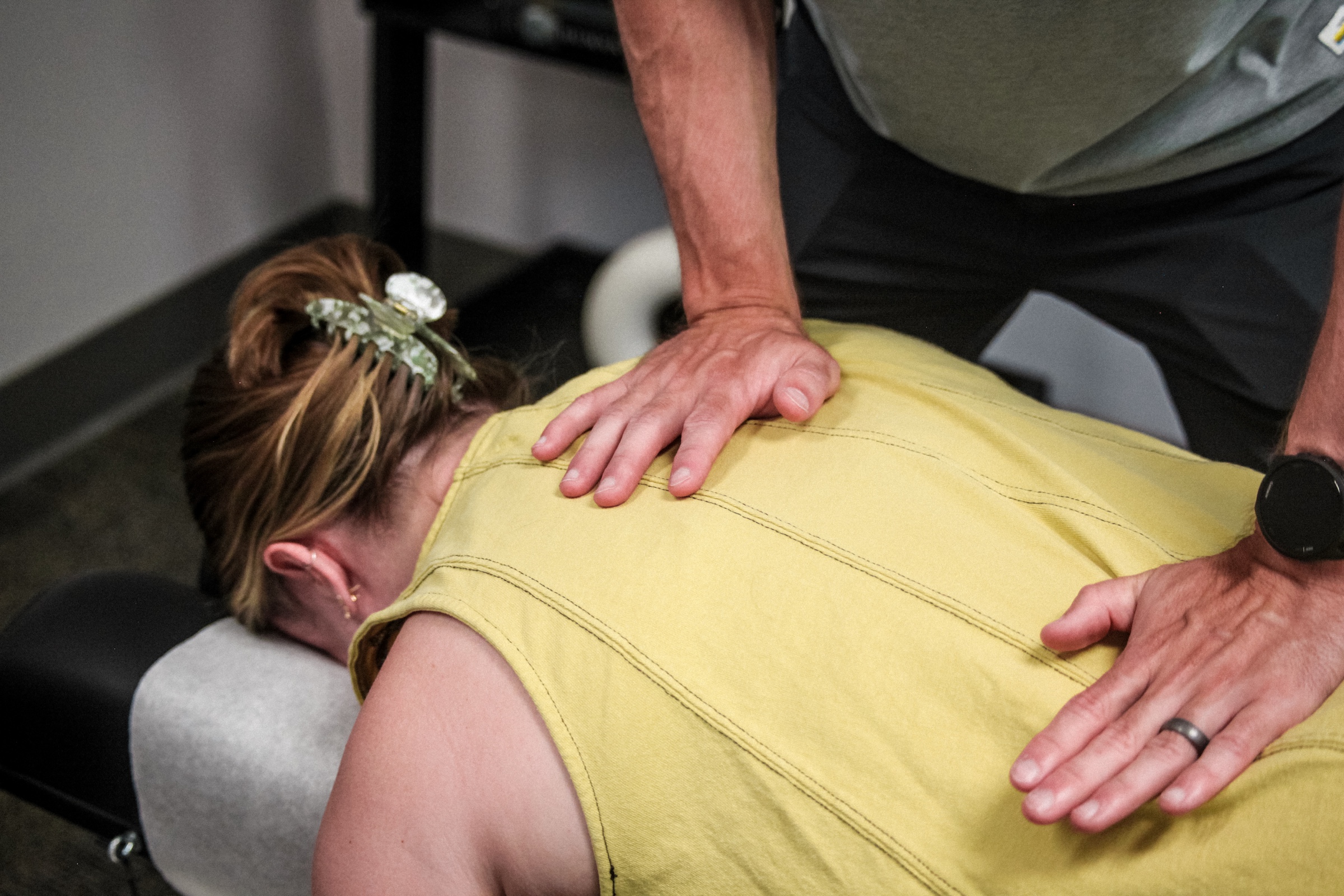
A mobility routine is perfect for a stiff, desk-tired upper back. But some things need a closer look. That same forward-head, rounded-shoulder pattern is what drives text neck, and if the tightness keeps returning no matter what you do, or you're getting pain that radiates into your arm, numbness, or tingling, that's a sign to get evaluated rather than stretch through it.
At Tarry Chiropractic in Lenexa, I'll take the time to understand what's actually going on in your neck, shoulders, and upper back, and build a plan to get you moving comfortably again. Give us a call at (913) 400-2014 or book online and let's straighten things out.