

Spinal decompression comes up in my office more than almost any other treatment I don't provide. Someone has seen an ad, or a friend went through a package of sessions, and they want to know whether it's the thing that will finally sort out their back. It's a fair question, and the honest answer takes a few minutes rather than a yes or no.
So here's what spinal decompression is, who it's aimed at, what the research actually supports, and what I do instead.
What spinal decompression actually is
First, an important split, because the same phrase gets used for two very different things.
Surgical decompression is an operation. A surgeon removes bone or disc material to take pressure off a nerve, in procedures like a laminectomy or a discectomy. That's a serious intervention with a real recovery, and it's a conversation for a spine surgeon.
Non-surgical spinal decompression is what the ads are almost always selling. It's a motorized form of traction. You lie on a specialized table, usually in a harness around your hips and trunk, and the table applies a slow, controlled pull along the length of your spine. It cycles: tension, then release, then tension again, typically for 20 to 30 minutes.
The reasoning goes like this. If you gently lengthen the spine, pressure inside the disc drops. In theory a lower pressure gives bulging disc material a chance to draw back toward the center, and it may help fluid and nutrients move in and out of a structure that has a poor blood supply of its own.
That's a sensible mechanism. Whether it reliably delivers on it is a separate question, and I'll get to it.
As for what it feels like: most people describe it as a firm stretch through the low back rather than anything sharp, and plenty find it relaxing enough that they doze off. You stay fully clothed, you're not sedated, and you can stop it at any point. If a session hurts, that's information worth raising immediately rather than pushing through.
Who it's meant to help
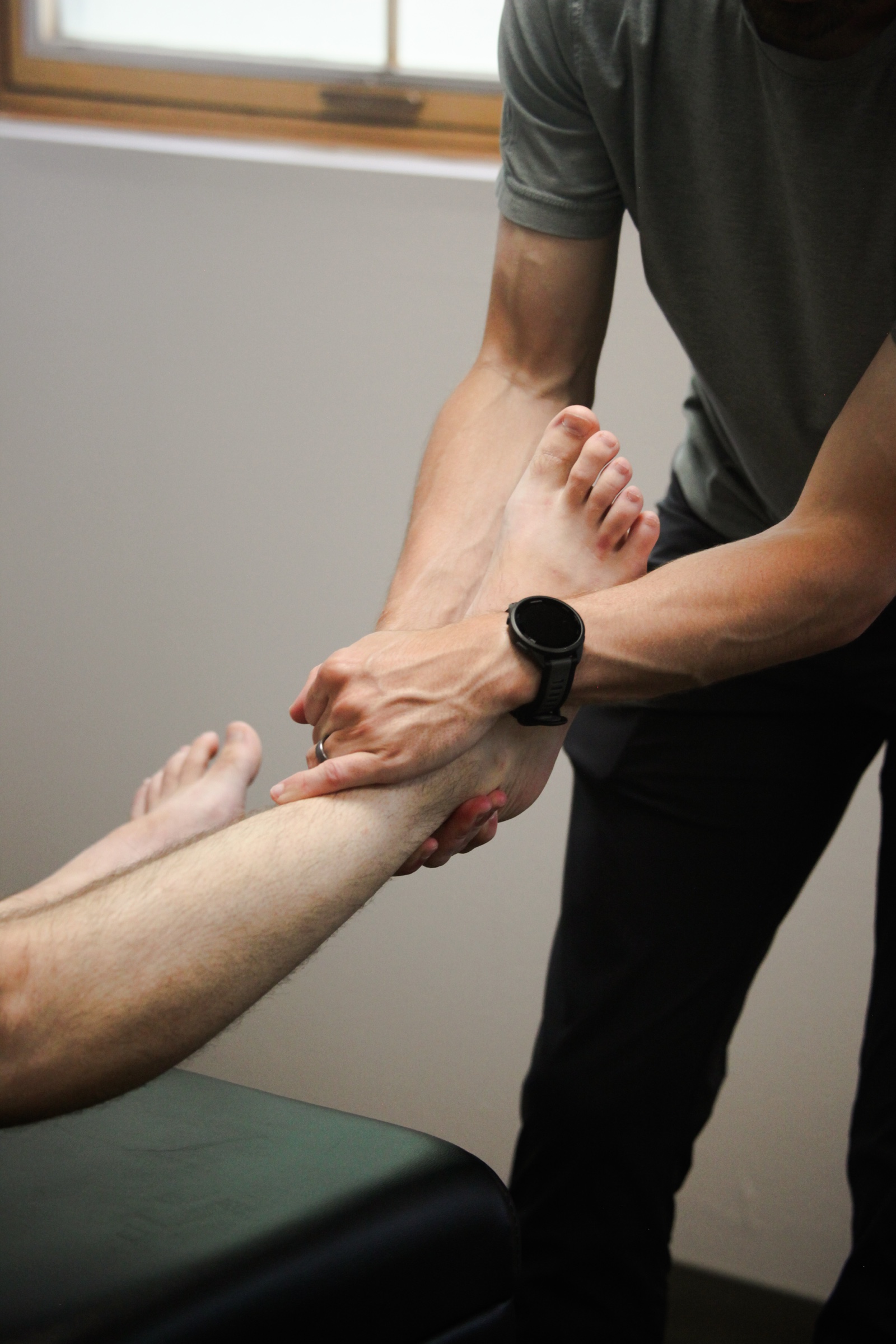
Decompression is aimed squarely at disc problems. The typical candidate has a contained disc bulge or herniation, often with pain radiating into a leg, and hasn't responded to a reasonable run of ordinary conservative care.
That's a narrower group than the marketing suggests. A great deal of low back pain isn't disc-driven at all. It's a strained muscle, an irritated joint, a hip that stopped moving and left the lower back to cover for it. I wrote about the range of causes in let's talk low back pain, and the leg-pain pattern specifically in my post on sciatica.
This is the part I'd want anyone to slow down on. If you're paying for a course of treatment designed for a disc, it's worth being reasonably confident a disc is actually the problem. That means an examination, and sometimes imaging, before the table, not after.
What the evidence actually shows
I want to be straight here rather than sell you something in either direction.
Some patients genuinely report meaningful relief after a course of decompression. I've had people tell me so. The proposed mechanism is plausible, and the treatment is low risk when it's screened properly.
But the research supporting it is thinner and of lower quality than what backs manual therapy, exercise, and staying active for back pain. Reviews of traction generally have not found it clearly better than other conservative treatment, and the studies specific to motorized decompression tables tend to be small, short, and often run by people with a commercial interest in the result. That doesn't make it worthless. It does mean nobody should be promising you a guaranteed outcome.
There's a practical dimension too. Decompression is usually sold in packages of 20 to 30 sessions over six to ten weeks, frequently paid up front and frequently not covered by insurance. When a treatment with a modest evidence base is bundled into a large prepaid commitment, that's worth thinking about carefully. If you do go ahead, ask in advance what happens if you're not improving halfway through.
And there are people it isn't safe for. Pregnancy, spinal fracture, tumor, advanced osteoporosis, surgical hardware in the spine, and abdominal aortic aneurysm all rule it out. A proper history should catch every one of those.
What to ask before you sign up
If you're considering a course of decompression, these are the questions I'd want answered first. A good clinic will welcome all of them.
- What's my actual diagnosis? Not "your disc," but which level, based on what examination findings. If nobody can tell you specifically what they're treating, that's the moment to pause.
- Why this rather than a trial of standard care? Guidelines put active treatment and exercise first for most back pain. Decompression is reasonable to consider when that hasn't worked, less so as an opening move.
- What does the whole course cost, and what's included? Get the full figure, not the per-session price. Ask whether examination, imaging, and follow-ups are extra.
- What happens if it isn't working? Ask specifically: at what point do we reassess, and what's the refund position on unused sessions? A clinic confident in its treatment will have a clear answer.
- Is it appropriate for me? Raise any history of osteoporosis, fracture, spinal surgery or hardware, pregnancy, or aneurysm before you're on the table.
- Who's operating it? Ask who sets the protocol and who's in the room, and whether a clinician reassesses you as you go or you simply work through the package.
None of this is a reason to avoid decompression. It's how you'd sensibly approach any treatment sold in a large prepaid block, and the answers tell you a lot about the clinic.
How it compares to a chiropractic adjustment
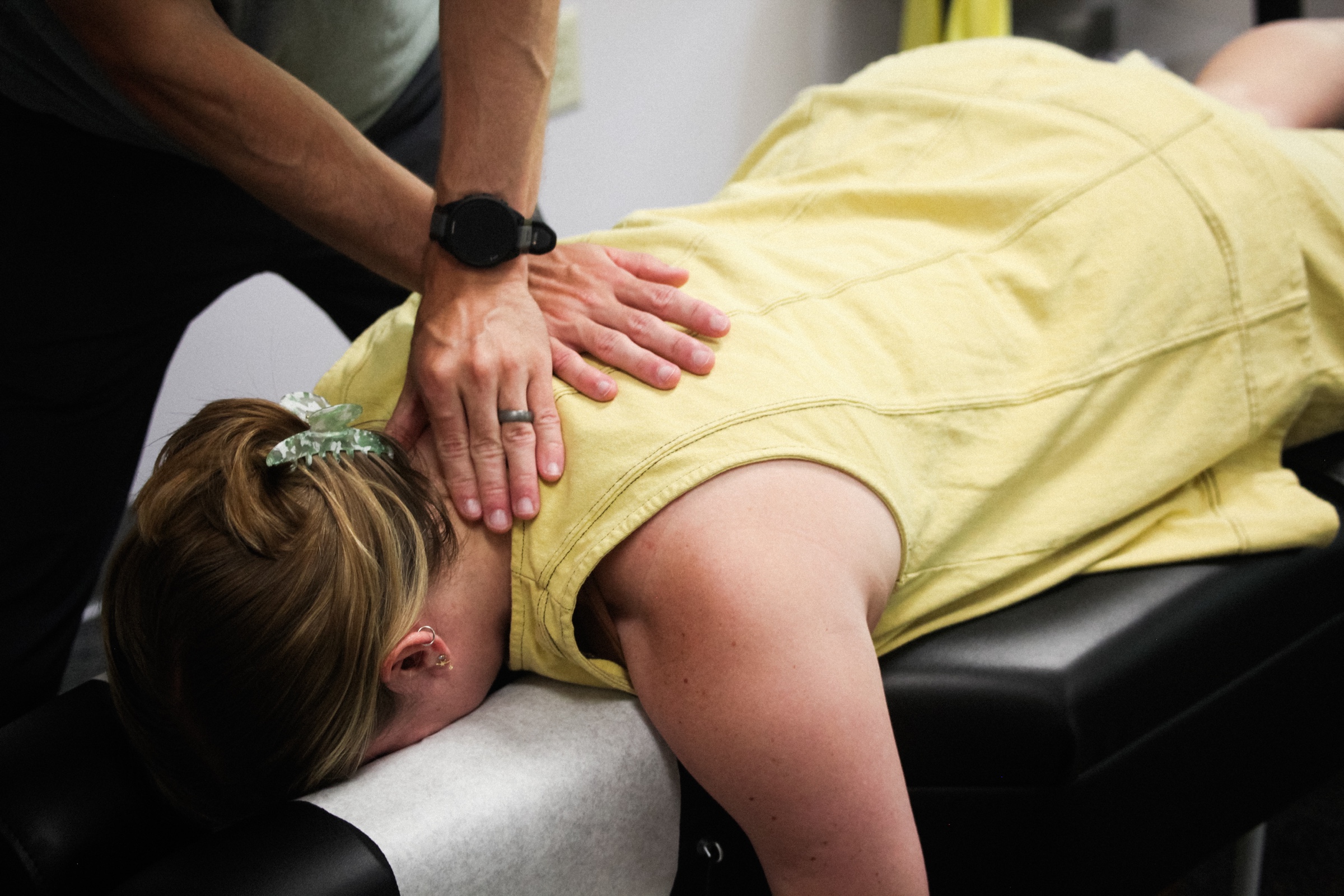
People often assume these are the same thing, or that one is a gentler version of the other. They're genuinely different.
An adjustment is a quick, specific movement I apply by hand to a joint that has stopped moving properly. It takes about a second. The target is the joint, and the goal is restoring motion to a segment that has gone stiff, which usually settles the muscle guarding around it as well.
Decompression is a sustained, machine-applied pull over 20 to 30 minutes. The target is the disc, and the goal is pressure change inside it.
Different structure, different mechanism, different time scale. Neither replaces the other, and a clinic that treats them as interchangeable isn't being precise with you.
What I do instead
I'll say this plainly: I don't have a decompression table at Tarry Chiropractic. If that's specifically what you're after, I'm not the right stop, and I'd rather tell you that now than after you've booked.
What I do is work out what's actually driving the pain, then treat that. A first visit is mostly history and examination, including the orthopedic and neurological testing that tells me whether a nerve is genuinely involved or whether something else is producing the pain. I wrote about how that visit runs in what to expect at your first chiropractic visit.
From there, care usually combines a few things. Hands-on work to restore movement to joints that have stiffened up. Soft tissue work on the muscles that have tightened around them. And, in every case, a home program, because what you do in the other 167 hours of the week matters more than the time you spend on my table. For back pain specifically, the strongest evidence anywhere is for staying active and building strength, which is unglamorous and works.
If your presentation genuinely looks like a disc that isn't responding, I'll say so, and I'll refer you on. That might be to a clinic with a decompression table, to a physical therapist, or for imaging and a surgical opinion if the picture warrants it. Referring out isn't a failure, it's the job.
When to get it looked at
If back or leg pain has hung around more than a couple of weeks without improving, get it examined properly rather than researching treatments for a diagnosis you don't have yet. Working out what the problem is comes first, and it's cheaper than guessing.
Go sooner, and treat it as urgent, if you have numbness in the groin or saddle area, any change in bladder or bowel control, or progressive weakness in a leg. Those are red flags that need same-day medical attention, not a chiropractor and not a traction table. The NHS has a clear plain-language guide to slipped discs and the warning signs worth knowing.
For everything else, start with an honest assessment. My post on why your lower back hurts covers the usual suspects and how to tell them apart.

At Tarry Chiropractic in Lenexa, I'll tell you what I think is going on, what I can help with, and what I can't. If that turns out to be something I don't offer, I'll point you to someone who does. Give us a call at (913) 400-2014 or book online.