

This is the question I get asked more than almost any other, and it usually comes with a slightly nervous laugh. Someone will be sitting on the table after their first visit and say, "So, do you have to go to the chiropractor forever once you start?" It's a fair thing to wonder. A lot of people have heard that story from a friend, or sat through a sales pitch at a clinic that wanted to sign them up for three visits a week for the next year.
So let me answer it plainly, because it matters more than most people realize when they're deciding whether to book.
The short answer is no
You do not have to keep coming forever. For most of the complaints I see, care is a short course with a beginning, a middle, and an end. You come in because something hurts, we figure out why, we treat it, and we give you what you need to keep it from coming back. Then you go live your life.
My goal with every patient is to make myself unnecessary. That sounds like a strange thing for a business owner to say, but a patient who gets better, understands their body, and manages it on their own is the best advertisement I could ask for.
Where the "you can never stop" idea comes from
There are a couple of reasons this myth sticks around.
The first is that some clinics genuinely do build their model around indefinite visit schedules, selling large packages up front regardless of the problem. That experience sticks with people, and understandably it makes them wary of the whole profession.
The second reason is more innocent. Chiropractic often makes you feel better quickly, and when people stop coming and the ache eventually creeps back, they conclude they must need it forever. Usually what's actually happened is that the underlying cause, the desk setup, the weak hips, the sleeping position, was never fully addressed. The adjustment relieved the symptom, but nothing changed the thing that produced it. That's not a reason to come in forever. That's a reason to fix the cause.
What a treatment plan actually looks like

Every patient is different, but most courses of care move through three stages.
Getting you comfortable
Early on, the priority is calming things down and restoring movement to joints that aren't moving well. This is the phase where visits are closest together, because that's when frequency actually does something. Depending on the problem, that might be a couple of visits a week for two or three weeks.
Fixing why it happened
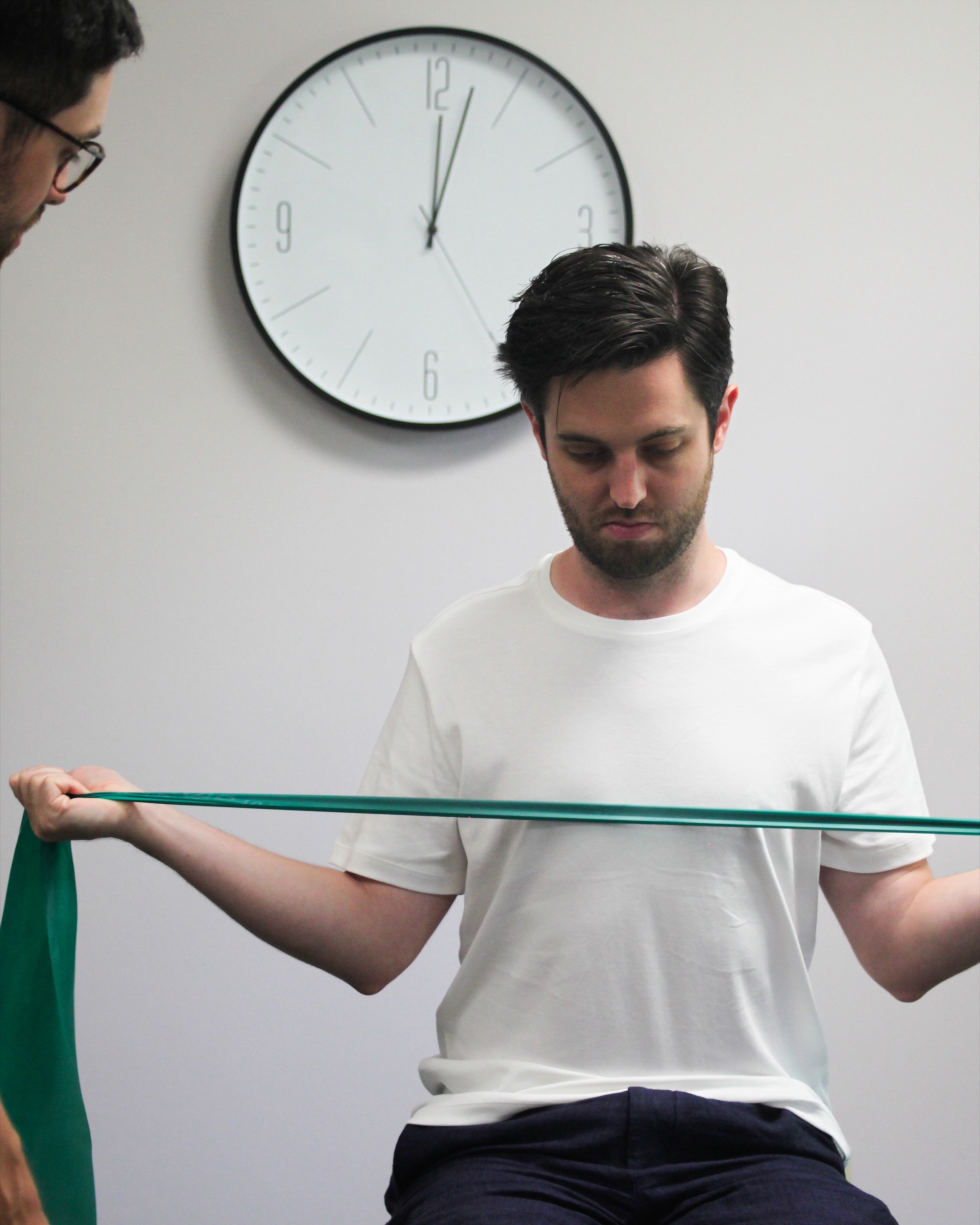
Once the pain settles, the work shifts. This is where we look at what set it off in the first place and start building tolerance, usually with specific exercises and some honest conversation about your day. Visits spread out here, often to once a week and then once every couple of weeks.
Sending you home
The last stage is the one clinics skip most often. You should leave with a short home program you actually understand, a clear idea of what to watch for, and permission to stop. If I've done my job, you don't need me on the calendar.
What actually decides how long it takes
When people ask how many visits they'll need, the honest answer is that it depends. These are the things that move the number most:
- How long you've had it. Something that started last Tuesday usually resolves faster than something you've quietly worked around for six years.
- What's actually wrong. A joint that's stiff and irritable behaves differently than a disc problem or a nerve issue like sciatica.
- What you do outside the office. This is the big one. Patients who do their home exercises consistently need fewer visits. It isn't close.
- What your day demands. A desk job, a physical trade, and a competitive sport all pull on your back differently, and the plan should reflect that.
- What you want out of it. "I want to stop hurting" and "I want to get back to deadlifting" are different goals with different timelines, and both are valid.
How you know it's working
You should be able to tell whether care is helping without taking anyone's word for it. Look for the pain being less intense, less frequent, or lasting a shorter time after it flares. Look for being able to do things you'd stopped doing. Look for needing me less, not more.
If several weeks have gone by and none of those are moving, that's a signal to reassess, not to keep booking. Sometimes that means changing the approach, and sometimes it means referring you to someone else. Spinal manipulation is well supported for back pain, and the NIH's National Center for Complementary and Integrative Health has a plain-language summary of the evidence if you want to read it yourself, but no single treatment is right for every problem or every person.
So is maintenance care a waste of money?
Not necessarily, and I want to be fair here. Some patients genuinely like coming in for regular care. That looks different for everyone. For some, it's weekly, for others, it's quarterly. People with physically punishing jobs, longstanding arthritic changes, or a history of flare-ups often find that regular care keeps them ahead of trouble, the same way some people keep up with a massage or a standing gym session. That comes up most with my older patients, and I go into it further in my post on chiropractic care for seniors.
The difference is that it should be a choice you make because it demonstrably helps you, with a schedule that fits your life. It should never be presented as the price of not getting worse. If you stop coming and nothing bad happens, that's information, and it's good news.
What a good plan should feel like
Whoever you see, here's what you're entitled to expect:
- A rough timeline up front. Not a guarantee, but an estimate, and an explanation of what you're working toward.
- A reason for the frequency. "Twice a week for three weeks, then we reassess" is a plan. "Come in whenever" is not.
- Homework. If you're never given anything to do on your own, the plan is missing its most important part.
- A reassessment point. A date where you both look at whether this is working.
- The freedom to stop. You can decline any treatment, at any time, for any reason. If that's ever made to feel difficult, trust your gut.
If you want a fuller picture of what a visit involves, I walked through it in what to expect at your first chiropractic visit, and there's more on the mechanics of treatment in what a chiropractic appointment looks like. The other question I get just as often is whether it's normal to be sore after an adjustment.
The bottom line
Most people who come to see me finish care and get on with things. They leave knowing a few stretches that help, what their particular back doesn't like, and when it's worth calling. Some come back a year later with something new. Some I never see again, and I count that as a win.
If you've been putting off getting something looked at because you were worried about being signed up for life, that's not how we work at Tarry Chiropractic in Lenexa. Come in, let's find out what's going on, and I'll tell you honestly what it will take to fix it. Give us a call at (913) 400-2014 or book online.