

If you've never been to a chiropractor before, walking in for the first time can feel like a bit of a mystery. What happens? Will it hurt? Do I get adjusted right away? These are some of the most common questions I hear, and they're completely fair ones to ask. So here's an honest, step-by-step look at what to expect at your first chiropractic visit at Tarry Chiropractic, so you can walk in knowing exactly what's coming and why.
The short version: your first visit is mostly a conversation and an exam. We spend time understanding your history and figuring out what's actually driving your pain before we do anything else. Plan for 30 to 45 minutes.
Before you arrive
There's a little paperwork to take care of first. You can fill it out ahead of time or when you arrive, and it covers your basic information, health history, and what brought you in. A few things that make your first visit smoother:
- Wear comfortable clothes you can move in, so the exam and any exercises are easy.
- Bring a photo ID and your insurance card if you're using insurance benefits.
- Fill out the online intake forms that are emailed to you before your visit. This helps streamline the intake process when you arrive and means less time in the waiting room filling out paperwork.
- Bring any recent imaging or records related to your complaint if you have them. It's not required to get started, but it helps me get a complete picture faster if you have recent X-rays or MRI results.
Step 1: We talk through your history
The first real part of your visit is a conversation. We go over the information you provided and talk through your health history together to make sure we don't miss anything relevant to what's bothering you. I want to understand not just where it hurts, but how it's affecting your day, your work, your sleep, and the activities you care about.
This part matters more than people expect. A good history often tells me as much about what's going on as the exam does, and it's where we start building a plan that actually fits your life.
Step 2: A thorough exam

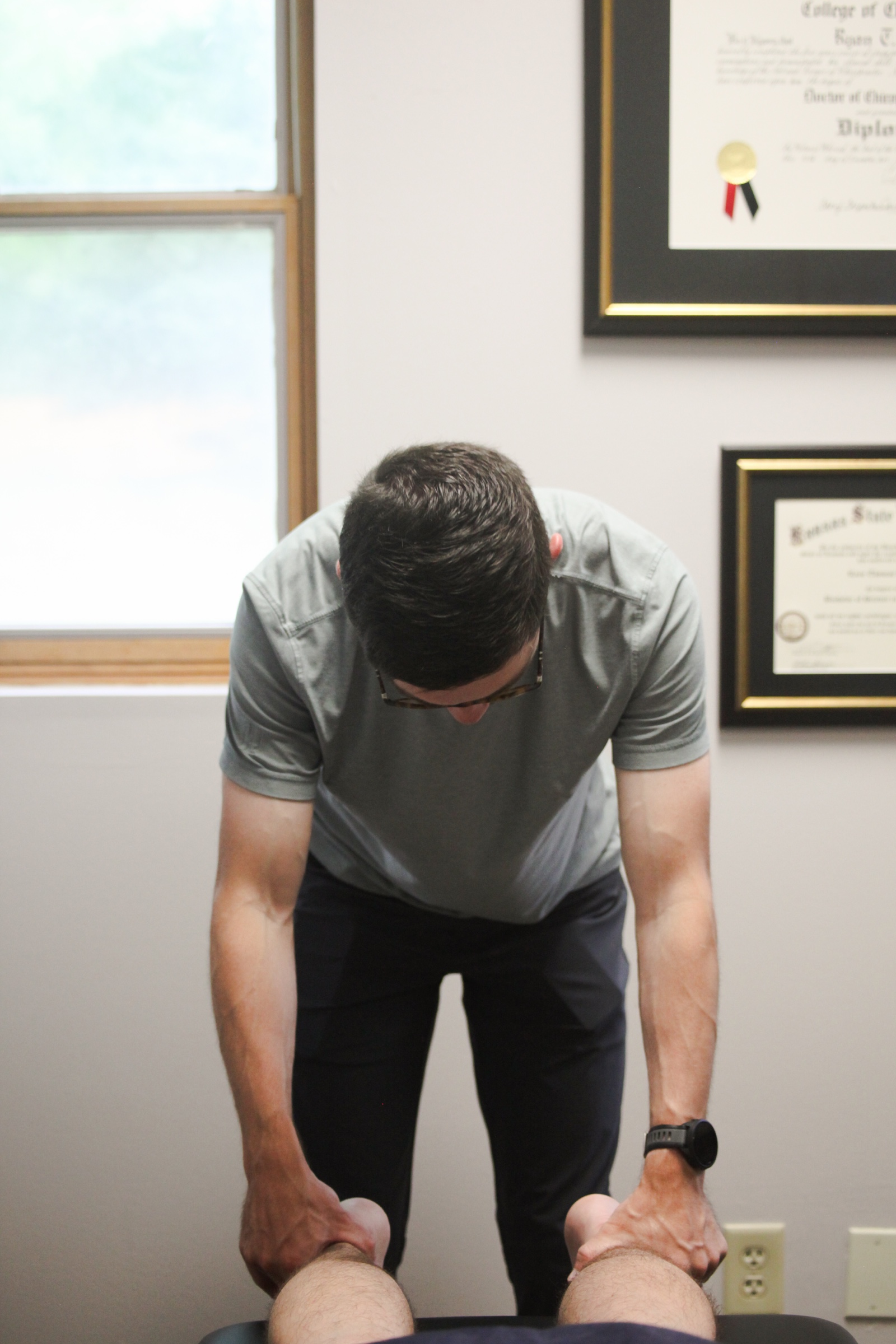
Next comes the physical exam, focused on the area of your complaint. Depending on your case, this can include muscle, sensory, and reflex testing, orthopedic tests, and functional checks of how your joints and muscles move and how strong they are.
I'll also spend time feeling the individual joints of your spine and assessing how they move. This is called palpation, and it's one of the most important tools I use. It usually feels like light to moderate pressure moving up and down your spine, and it tells me which joints are moving too much, too little, or in a way they shouldn't be.
Before any hands-on exam or treatment, I'll ask you to sign an informed consent form and I'll walk you through the expected benefits and any risks of treatment. You have the right to ask questions and to decline anything at any time. My recommendations are what I believe is best for you, but how we proceed is always your call.
Step 3: Your diagnosis and a plan built around you
Once the history and exam come together, I can tell you what I think is going on and what I'd recommend. Sometimes that's a clear path forward. Occasionally it means referring you to another provider if that's what's genuinely best for you.
From there we'll talk through a treatment plan. This looks different for everyone. Some conditions do best with a few visits a week early on to calm things down and restore function, while others need much less. Nothing about the plan is set in stone. We adjust it as you progress, and you're always welcome to ask why we're doing what we're doing.
Step 4: Treatment, often the same day
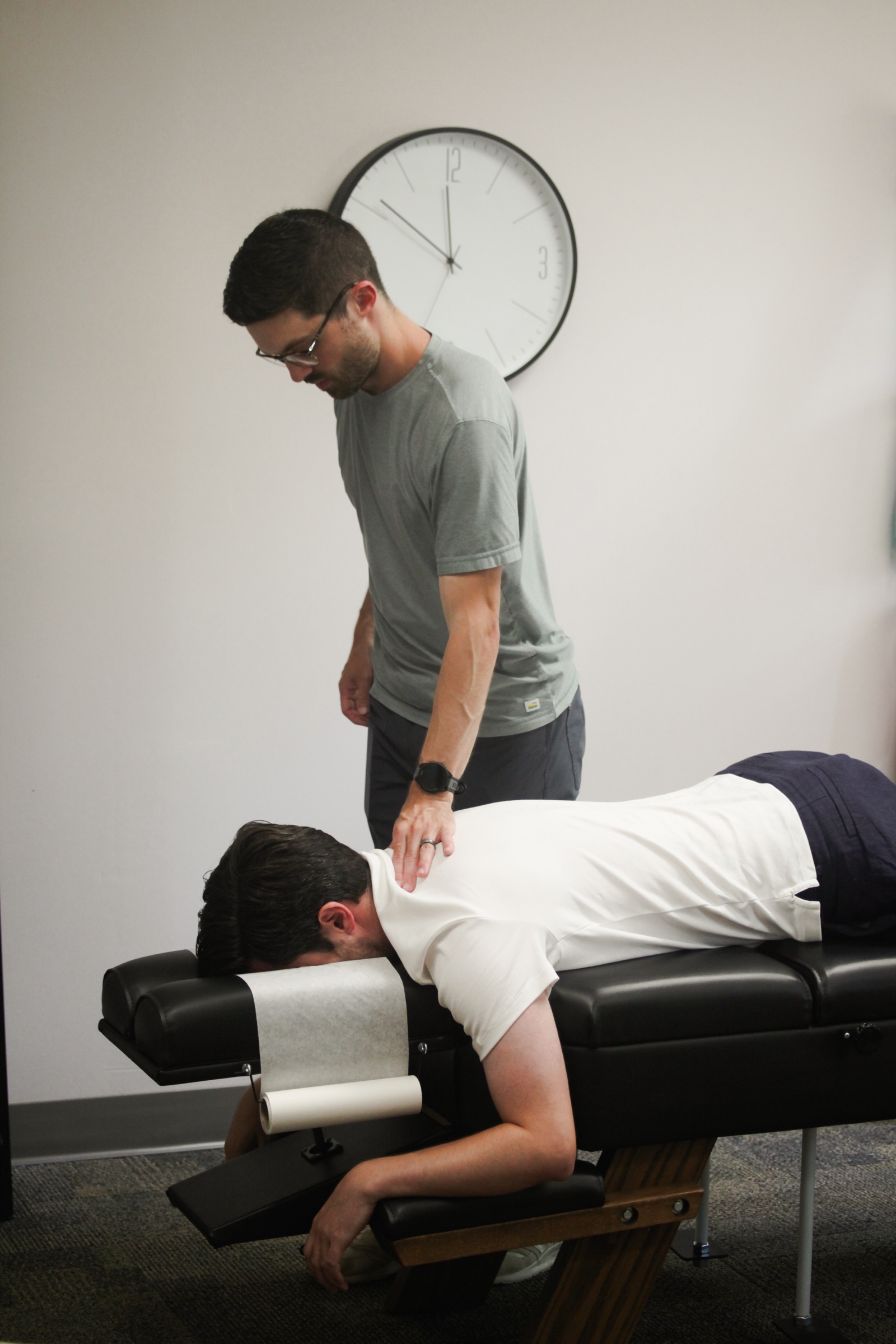
If the exam supports it and you're comfortable, we'll usually begin treatment on the first visit. Treatment most often centers on adjusting the joints of your spine, and it may also include work on the surrounding muscles to relieve tension and improve mobility.
I'll typically show you a couple of simple exercises too. We'll go through them together in the first visits, then you'll do them at home to keep progress going between appointments. For most people an adjustment feels like a quick release of pressure rather than anything painful. Some mild soreness afterward is normal and usually fades within a day, a lot like how you'd feel after a good workout.
For a deeper look at how chiropractic care works and the different techniques involved, I wrote more about that in What Are Chiropractors and What Does an Appointment Look Like?.
How long it takes, and what comes next
Your first visit usually runs 30 to 45 minutes, though complex cases can take a bit longer. Follow-up visits are typically around 15 minutes. As you improve, our recommendations will change with you. Early on we might focus on calming an acute issue, and as things settle we shift toward movement, strengthening, and keeping you feeling good for the long haul.
My goal from the very first visit is simple: to be transparent about what we're doing and why, and to collaborate with you on a plan to resolve what brings you in. Patients who understand their care tend to get better faster and feel more confident along the way. If you're dealing with something specific like lower back pain or sciatica, those posts are a good place to read more before you come in.
The hardest part of chiropractic care is usually just booking that first visit. Once you're here, you'll find it's a lot more relaxed and collaborative than you might expect.