

A little while back I wrote about lower back pain from sitting too long, and I promised a follow-up on the stretches that actually help. Here it is. If your lower back feels tight and achy by mid-afternoon at your desk, the right stretches for lower back pain can loosen you up and take the edge off, and most of them you can do without even leaving your chair.
One reminder before we start: stretching feels great, but it works best when you pair it with moving more often and building a little strength. Think of these stretches as the relief valve, not the whole plan. With that said, let's get you loosened up.
Why stretching helps when you sit all day
When you sit for hours, a few things happen to your lower back. Your hip flexors, the muscles that run from your spine to the front of your thighs, settle into a shortened position and start to tug on your pelvis. Your glutes switch off from being sat on all day. And the muscles and discs of your lower back hold a steady, static load they aren't built to carry for eight hours straight. Blood flow to the area slows, and the whole region stiffens up.
Gentle stretching pushes back on all of that. It lengthens the muscles that tighten from sitting, restores a bit of movement to joints that have been parked in one position, and gets fresh blood flowing to tired tissue. That's why even a 30-second stretch can make a stiff back feel noticeably looser. None of this is complicated, and none of it takes special equipment.
Before you start
Two ground rules. First, stretching should feel like a gentle pull, never a sharp pain. Ease into each position, breathe, and stop just short of any discomfort. Second, don't bounce. Slow and steady wins here. If a particular movement makes your pain worse or sends symptoms down your leg, back off and read the last section of this post.
Six desk stretches for your lower back
You can get through all six in about five minutes. Hold each one for 20 to 30 seconds unless noted, and remember that little and often beats one marathon session.
- Seated cat-cow. Sit tall with your hands on your knees. Slowly arch your back and look up, then round your spine and tuck your chin. Move with your breath for 5 to 10 slow reps. This wakes up a spine that's been held still for hours and is the perfect warm-up. It's also worth running through before a big day of summer yard work or gardening.
- Standing back bend. Stand up, place your hands on your lower back, and gently lean backward to open the front of your hips and spine. It's the direct opposite of the slouched position you sit in all day, which is exactly why it feels so good. Two or three easy reps is plenty.
- Knee-to-chest. Sitting or lying down, draw one knee up toward your chest and hold it with both hands. You'll feel it release the lower back and glute on that side. Hold, then switch legs and repeat.
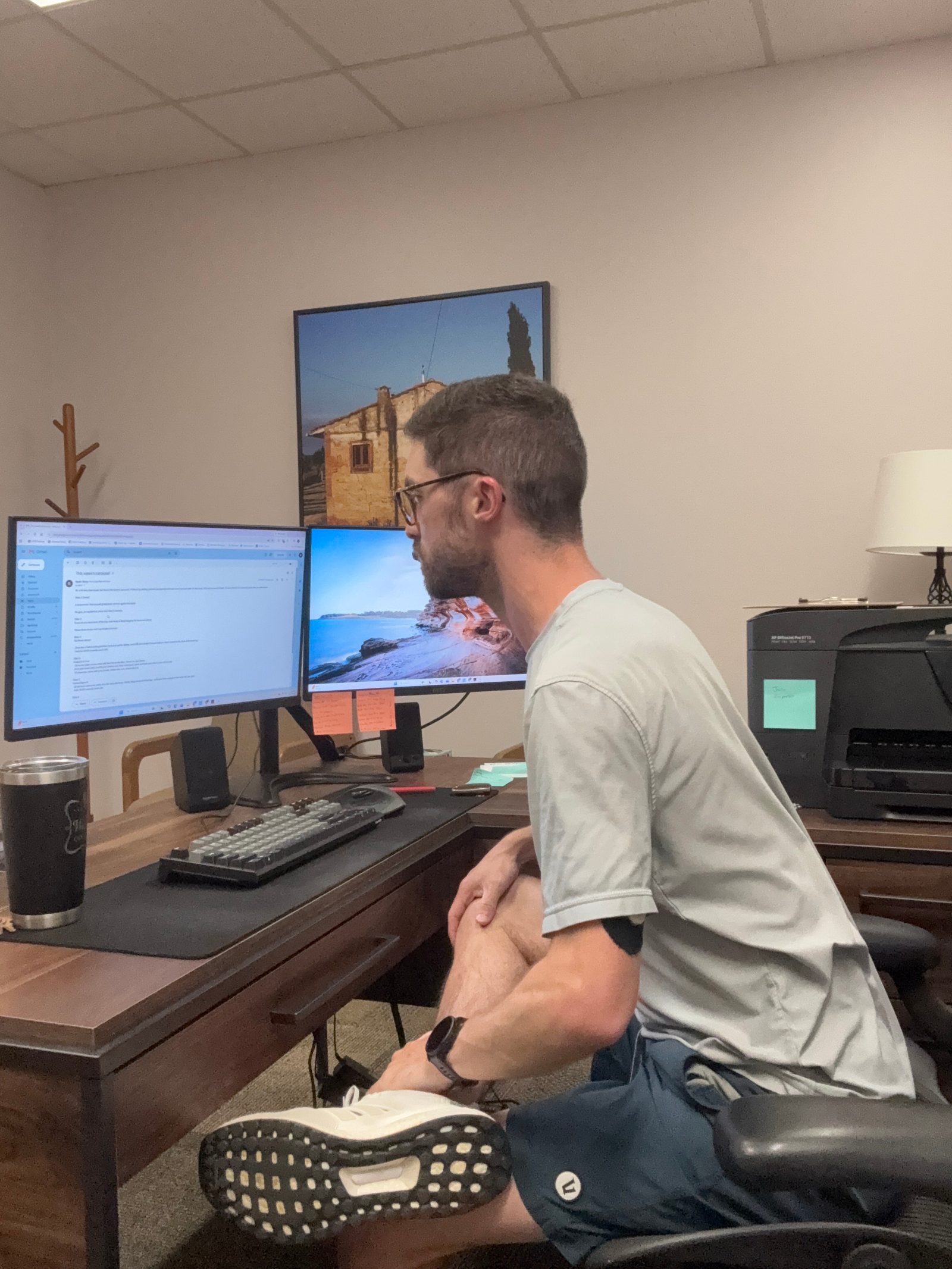
- Seated figure-four. Sitting in your chair, cross one ankle over the opposite knee and gently lean forward with a tall back. This stretches the glute and hip, two spots that get tight from sitting and quietly tug on the lower back when they're stiff.
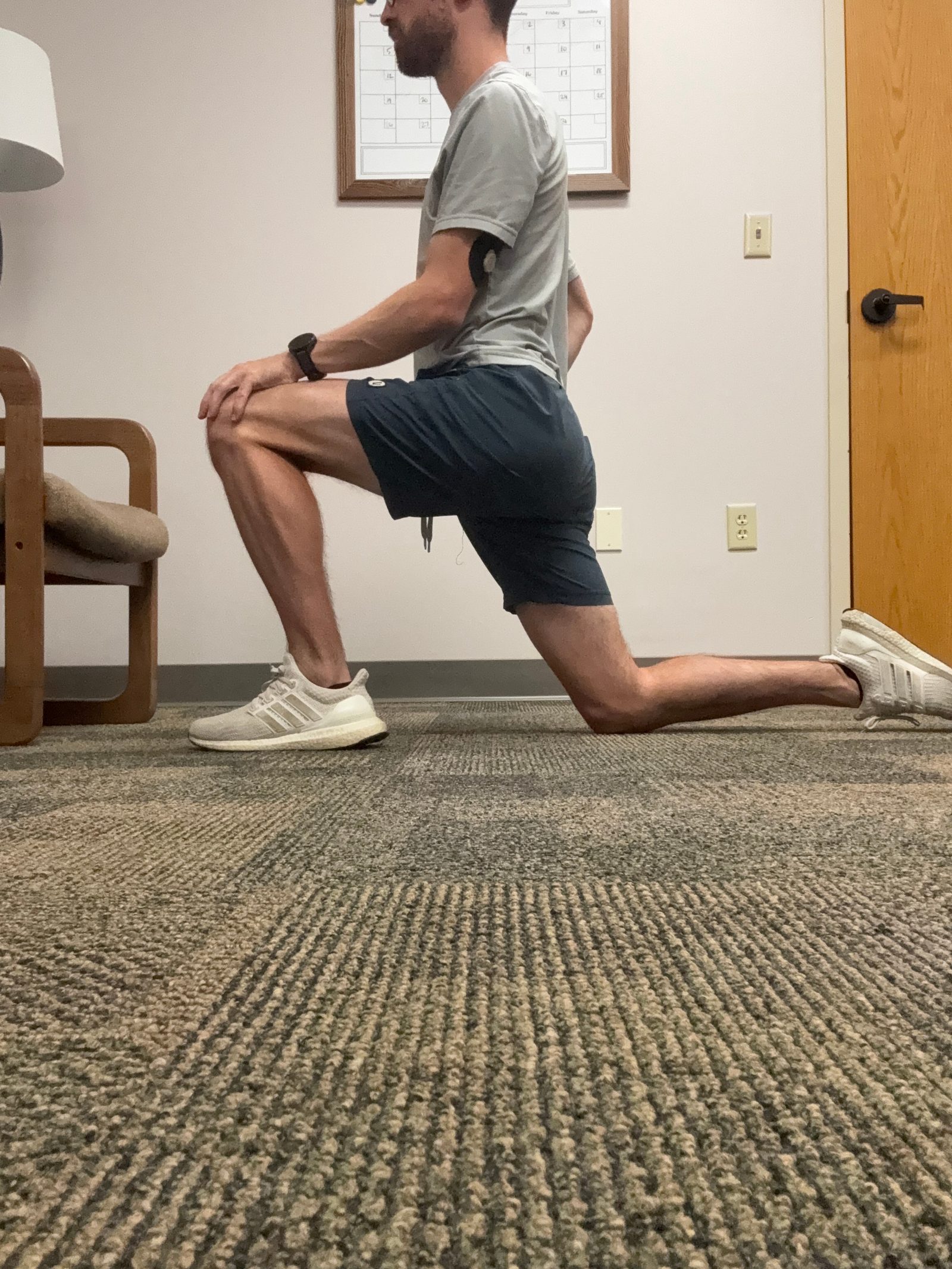
- Kneeling hip-flexor stretch. Drop into a half-kneel, one foot forward, and gently push your hips forward until you feel a stretch at the front of the back hip. Tight hip flexors are one of the biggest hidden drivers of desk-related back pain, so don't skip this one. If the hip itself is your main complaint rather than the back, I break it down further in my three exercises for hip pain.
- Seated spinal twist. Sit tall, place one hand on the outside of the opposite knee, and gently rotate through your mid-back. Keep it slow and let your breath do the work, then twist the other way.
A simple five-minute routine
If you'd rather just follow along, here's the order I usually suggest. Run through it once in the morning and again to break up your afternoon:
- Seated cat-cow, 8 to 10 slow reps, to warm up.
- Standing back bend, 3 easy reps.
- Kneeling hip-flexor stretch, 30 seconds each side.
- Knee-to-chest, 30 seconds each side.
- Seated figure-four, 30 seconds each side.
- Seated spinal twist, 20 seconds each side, to finish.
That's it. Five minutes, no equipment, and your back will thank you by 3pm.
A couple more when you have floor space
The six above are built for your desk, but if you have a few minutes and a bit of floor at home, these three are worth adding:
- Child's pose. Kneel and sit back onto your heels, then walk your hands forward and let your chest sink toward the floor. It's a gentle, full-length stretch for the whole lower back.
- Press-up. Lie face down and slowly press your upper body up onto your forearms or hands, keeping your hips on the floor. This gently extends a spine that spends all day rounded forward. Only go as far as stays comfortable.
- Lying knee rolls. On your back with knees bent, let both knees drop slowly to one side, then the other. A relaxed way to loosen the lower back at the start or end of the day.
Make it a habit, not an event
The people who get the most out of stretching are the ones who do a little, often. One five-minute round in the morning does far less than the same round broken up across the day. Tie it to something you already do, like refilling your water or the end of a meeting, and it stops being one more thing to remember.
Because sitting is the root of the problem, keep pairing the stretches with two other things: movement and strength. Stand and move for a minute or two every 30 to 45 minutes, and spend a little time strengthening your core and glutes so your lower back has help holding you up rather than doing all the work itself. The band exercise above is a simple place to start. For the full picture on why sitting quietly wears on your back in the first place, I broke it down in Why Does My Lower Back Hurt?
How soon will you feel a difference?
Most people notice a little relief the very first time, that loose, warmer feeling right after a good stretch. The lasting change, where your back simply stops getting as tight in the first place, takes a couple of weeks of doing this consistently. That's normal and worth knowing, because it's the point where a lot of people quit too early. You aren't just stretching a muscle in the moment, you're slowly giving your body back range it lost to sitting, and that takes repetition.
A few common mistakes
When stretching doesn't seem to help, it's usually one of these:
- Stretching hard, once. A single aggressive session does far less than short, frequent ones.
- Only stretching, never strengthening. Loose muscles with no support underneath them tighten right back up.
- Pushing into pain. More is not better. Sharp pain is a signal to stop, not to press on.
- Ignoring the setup. If your chair and screen fight you all day, no amount of stretching keeps up. Small ergonomic tweaks matter.
When stretching isn't enough
Stretches are great for a stiff, tired back, but they aren't a cure-all. Most everyday sitting soreness eases once you move more and loosen up, and the NHS has a solid overview of self-help for back pain if you want a second, independent read. But some symptoms deserve a closer look. If your pain keeps returning no matter how diligent you are, lingers beyond a couple of weeks, or radiates down your leg, that last one can point to something like sciatica, which is worth having assessed specifically. The same goes for numbness, tingling, or weakness. If you want the deeper clinical rundown of what can drive low back pain, I covered it in Let's Talk Low Back Pain.
At Tarry Chiropractic in Lenexa, I take the time to figure out what's actually driving your back pain and build a plan around it, whether that's hands-on treatment, the right exercises for your body, or simple changes to how you sit and move. If your back is sore day after day at your desk, give us a call at (913) 400-2014 or book online and let's sort it out.