

Hip pain is one of those complaints that rarely stays put. It shows up as a deep ache in the front of the hip, or a nagging spot off to the side, and before long the lower back is involved too. The good news is that a lot of it responds well to a few minutes of the right movement. These three exercises for hip pain are the ones I hand out most often, and they take about ten minutes.
They aren't a cure for everything that can go wrong in a hip. But for the ordinary, stiffness-driven kind that builds up from sitting, they do a lot of work.
Why hips get sore in the first place
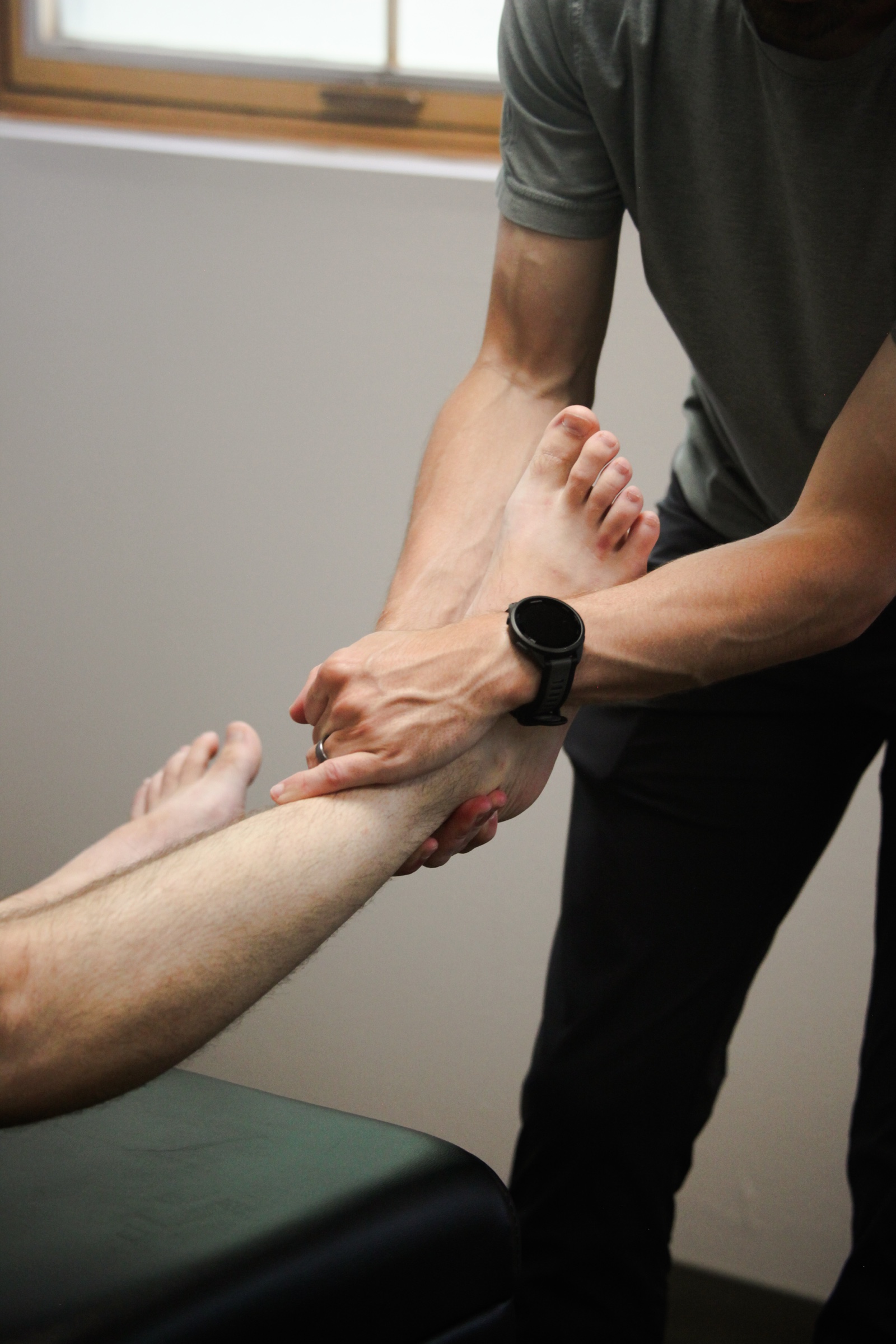
Most of the hip pain I see in Lenexa isn't from an injury. It's from position.
If you spend most of the day sitting, your hip flexors, the muscles at the front of the hip, sit in a shortened position for eight or nine hours. Muscles adapt to the length you keep them at. So when you stand up, the front of the hip resists, and the pelvis gets pulled into a tilt that the lower back has to compensate for.
At the same time, your glutes are doing close to nothing all day. They're the biggest muscles in the body and they're meant to drive extension, but sitting leaves them underused and weak. Tight in the front, weak in the back, and the hip joint ends up caught between the two.
That's also why hip pain and back pain arrive together so often. The hips and lumbar spine share muscles and act as one unit. When the hips stop moving well, the lower back covers for them, which is exactly the pattern I describe in why does my lower back hurt.
Exercise 1: kneeling hip flexor stretch
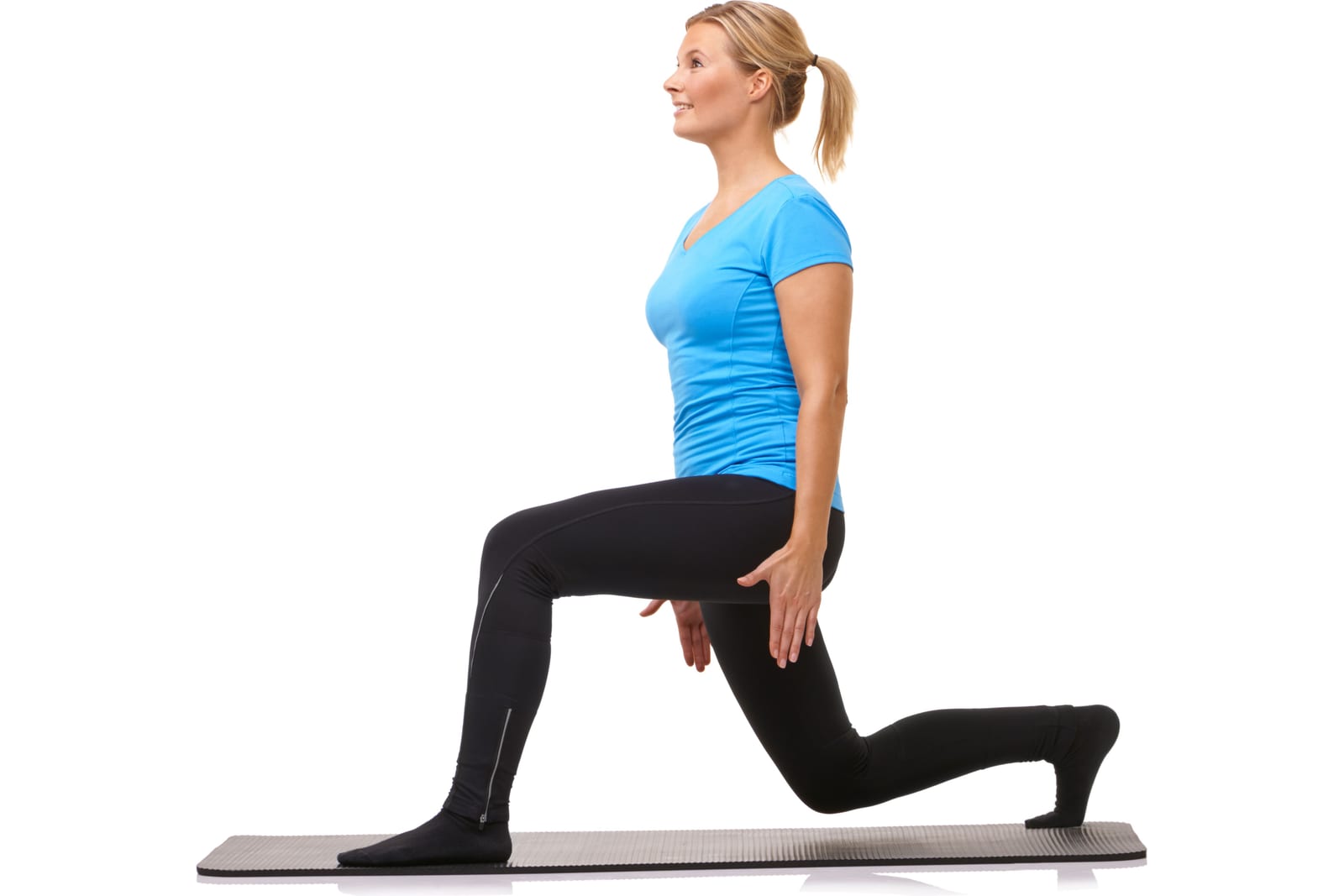
This one goes straight at the front of the hip.
Kneel on the painful side with the other foot planted in front of you, like a lunge. Before you move forward, tuck your tailbone under slightly, so your pelvis rotates back. That small tuck is the whole exercise; without it you'll arch your lower back and feel nothing in the hip.
Now shift your weight gently forward until you feel a stretch across the front of the kneeling hip. Hold 30 seconds, breathe, and do two rounds each side.
Use a cushion under the knee. If the front of the hip pinches rather than stretches, back off the range.
Exercise 2: figure-four stretch
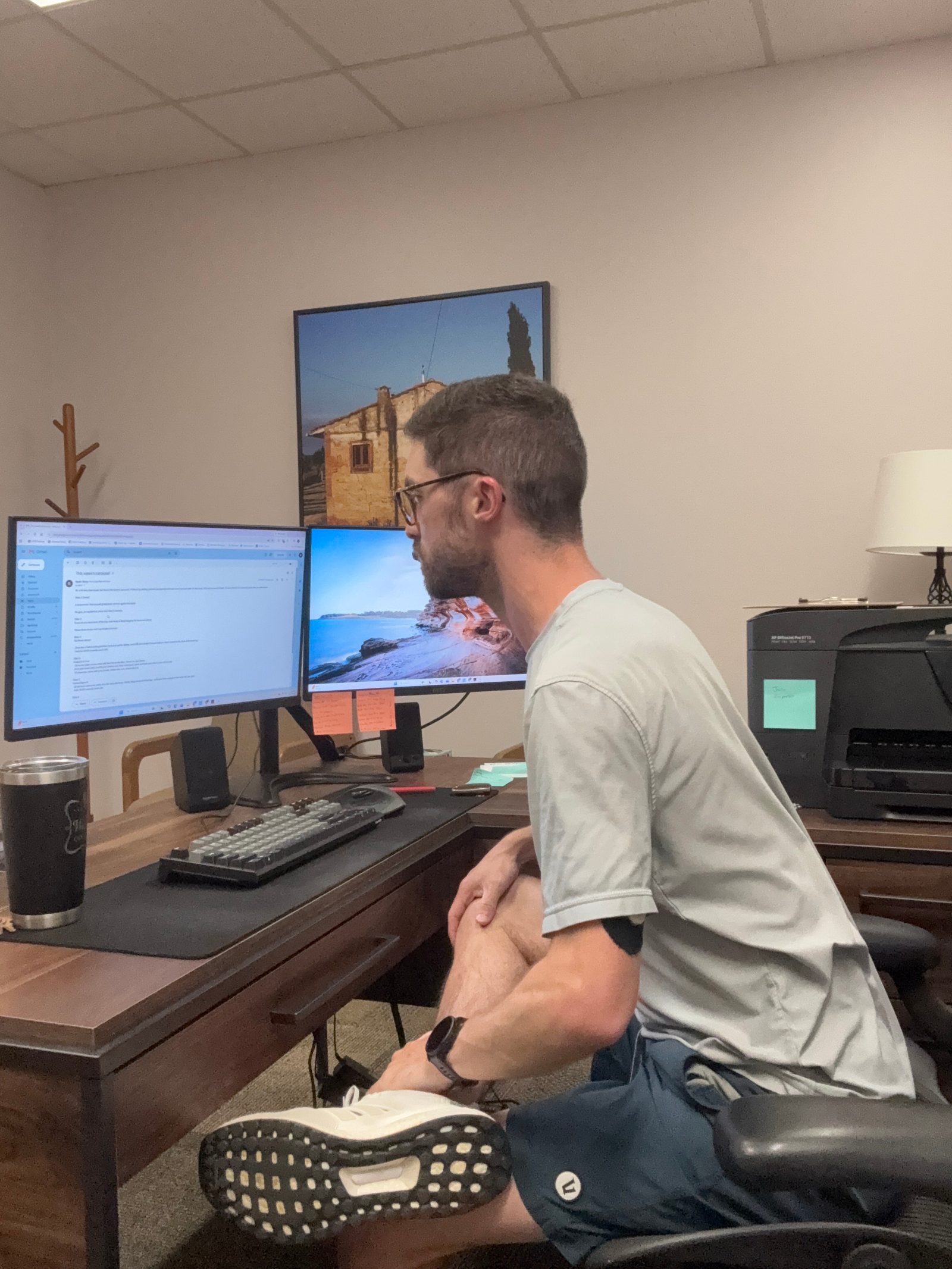
This targets the glutes and the deep rotators on the outside of the hip, which is where a lot of people feel the sharper, more localized ache.
You can do it lying down or in a chair. Cross the ankle of the sore side over the opposite knee so your legs make a number four. If you're lying down, reach through and pull the bottom thigh toward your chest. If you're sitting, keep your back straight and lean forward from the hips until you feel it in the glute.
Hold 30 seconds each side, twice. Sitting up straight is doing more work here than leaning far; a rounded back takes the stretch out of the hip.
Exercise 3: glute bridges

The first two open the hip up. This one builds something to hold it there, which is why I never give the stretches without it.
Lie on your back, knees bent, feet flat and about hip width apart. Push through your heels and lift your hips until your body makes a straight line from knees to shoulders. Squeeze the glutes at the top for a second, then lower slowly.
Ten to fifteen reps, two sets. Go slower rather than higher. If you feel this mostly in your hamstrings or your lower back, bring your feet a little closer to you and focus on the squeeze at the top.
How to actually fit them in
The order matters a little. Stretch first, strengthen second: the two stretches open the hip up, and the bridges teach it to hold that position under load. Doing it the other way round works, it's just less efficient.
The dose that works for most people is ten minutes, five or six days a week. That's less than it sounds. The hip flexor stretch and the figure-four are two minutes each including both sides, and the bridges are about three. If you can only do a fraction of it, do the bridges, because strength is the part that carries over into the rest of the day.
Timing helps too. If your hip is at its worst after a long stretch of sitting, break the routine up and do one piece mid-afternoon rather than saving all three for the evening. And expect the first week to feel unremarkable. Mobility work is cumulative, and most people notice the change in how they get out of a chair before they notice it as less pain.
Do all three most days. Stretching alone tends to feel good for an hour and change nothing by tomorrow; pairing it with strength is what makes it stick. That's the same principle behind my mobility exercises for golfers, where the rotation is different but the logic is identical.
What to do if they aren't helping
Give it two or three weeks of consistency before you judge it. Mobility work is cumulative and almost nobody feels much after two sessions.
If you're consistent and it still isn't budging, that's useful information rather than a failure. It usually means the source isn't simple stiffness. Hip pain can come from the joint itself, from arthritic change, from a tendon, from the lower back referring pain down, or from nerve irritation like sciatica. Those need different treatment, and stretching harder won't sort out any of them.
Get it examined sooner if you can't bear weight on the leg, if the pain wakes you at night, if it followed a fall, or if you have numbness, tingling, or weakness travelling down the leg. The NHS has a straightforward guide to hip pain in adults and when it warrants attention.
For the everyday version, a few of my stretches for lower back pain work well alongside these, since the two areas are so closely linked.
At Tarry Chiropractic in Lenexa, I'll work out whether your hip pain is coming from the hip, the back, or something else entirely, then build a plan around that answer. Give us a call at (913) 400-2014 or book online.