

If you have never been to a chiropractor, you probably picture someone cracking backs. That is part of the job, but if you are wondering what does a chiropractor do day to day, the honest answer is a lot more than that. I spend as much of my day examining, working on muscles, adjusting shoulders and ankles, and teaching exercises as I do adjusting spines.
This post walks through the whole toolkit, so you know what you are actually signing up for before you book.
What does a chiropractor do, in plain terms
A chiropractor diagnoses and treats problems with the joints, muscles, and nerves that let you move. The spine is our specialty, which is why it gets all the attention, but the same principles apply to every joint in the body.
Chiropractors are doctors, though not medical doctors. We complete a four year Doctor of Chiropractic program after undergraduate study (mine was in kinesiology), pass national board exams, and hold a state license. We do not prescribe medication or perform surgery. What we are trained to do is figure out why something hurts or will not move properly, and then treat that with our hands, with movement, and with what you do at home.
If you want a neutral overview from outside the profession, MedlinePlus, from the National Institutes of Health, has a good summary of chiropractic care and the research behind it.
It starts with an exam, not an adjustment
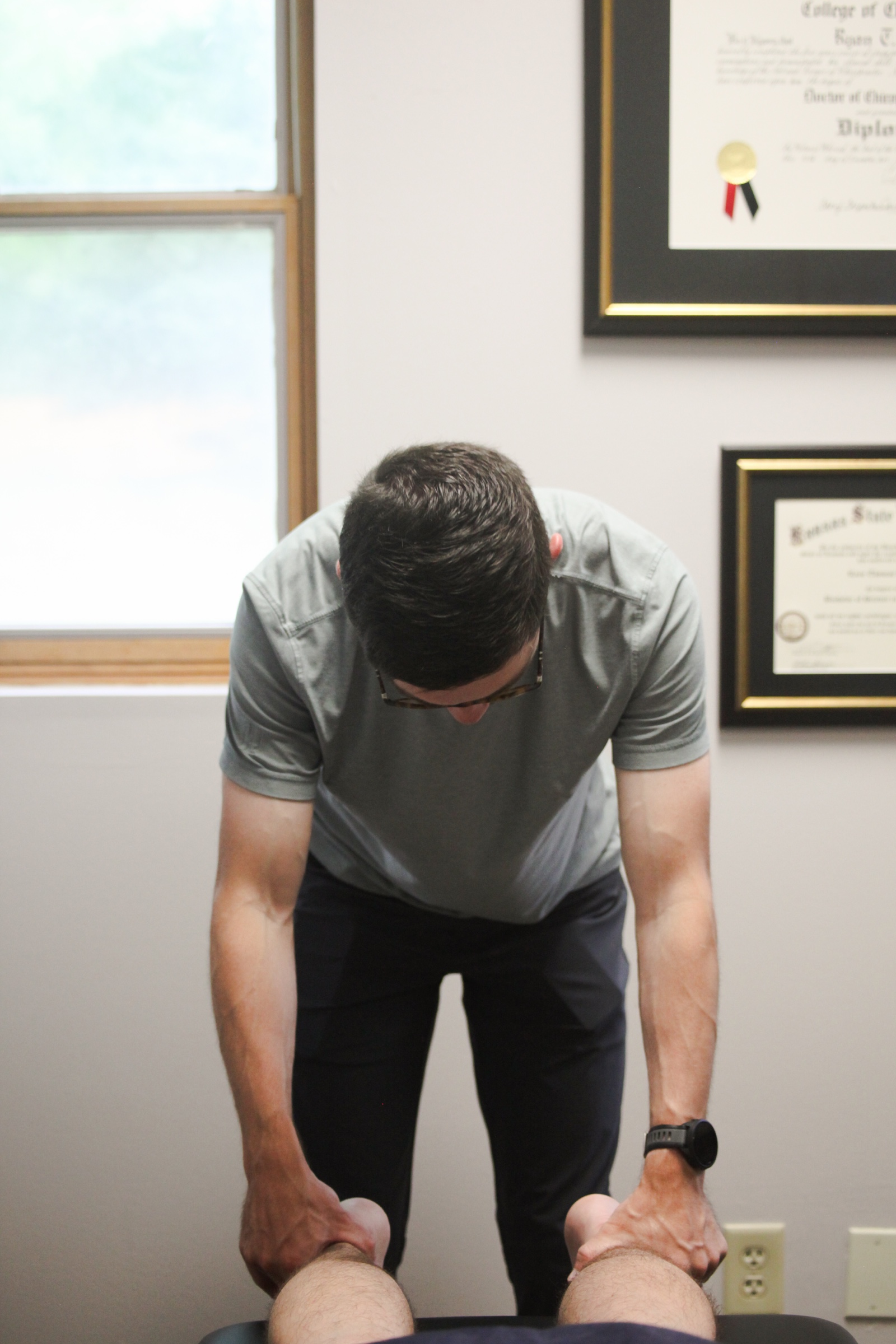
The most important thing I do happens before any treatment. A first visit is mostly history and examination: where it hurts, how it started, what makes it better or worse, followed by orthopedic and neurological testing and feeling how each joint moves.
That exam answers the question that matters most. Is this a problem I should treat, or does it need someone else? Most of the time it is mine to treat. Sometimes the right move is a referral, and finding that out on day one is far better than finding out six visits in. I wrote a full walkthrough of what to expect at your first chiropractic visit if you want the step by step version.
Spinal adjustments: the part everyone knows
An adjustment is a quick, controlled movement applied to a joint that is not moving as well as it should. The goal is to restore motion, which tends to ease pain and the muscle guarding around the area.
The pop you sometimes hear is gas releasing from the fluid inside the joint, the same thing that happens when you crack your knuckles. It is not a bone going back into place, and it is not what makes the adjustment work. Some people love the sound. Some people hate it. If you are in the second group, I can use an adjusting instrument or gentler mobilization that moves the joint without it.
Adjustments are not one size fits all, either. How I adjust a 25 year old lifter, a 70 year old with thinning bones, and someone who is seven months pregnant looks very different. And if you would rather not have your neck adjusted, that is fine too. There are other ways to get it moving.
Extremity adjustments: shoulders, hips, knees, and ankles
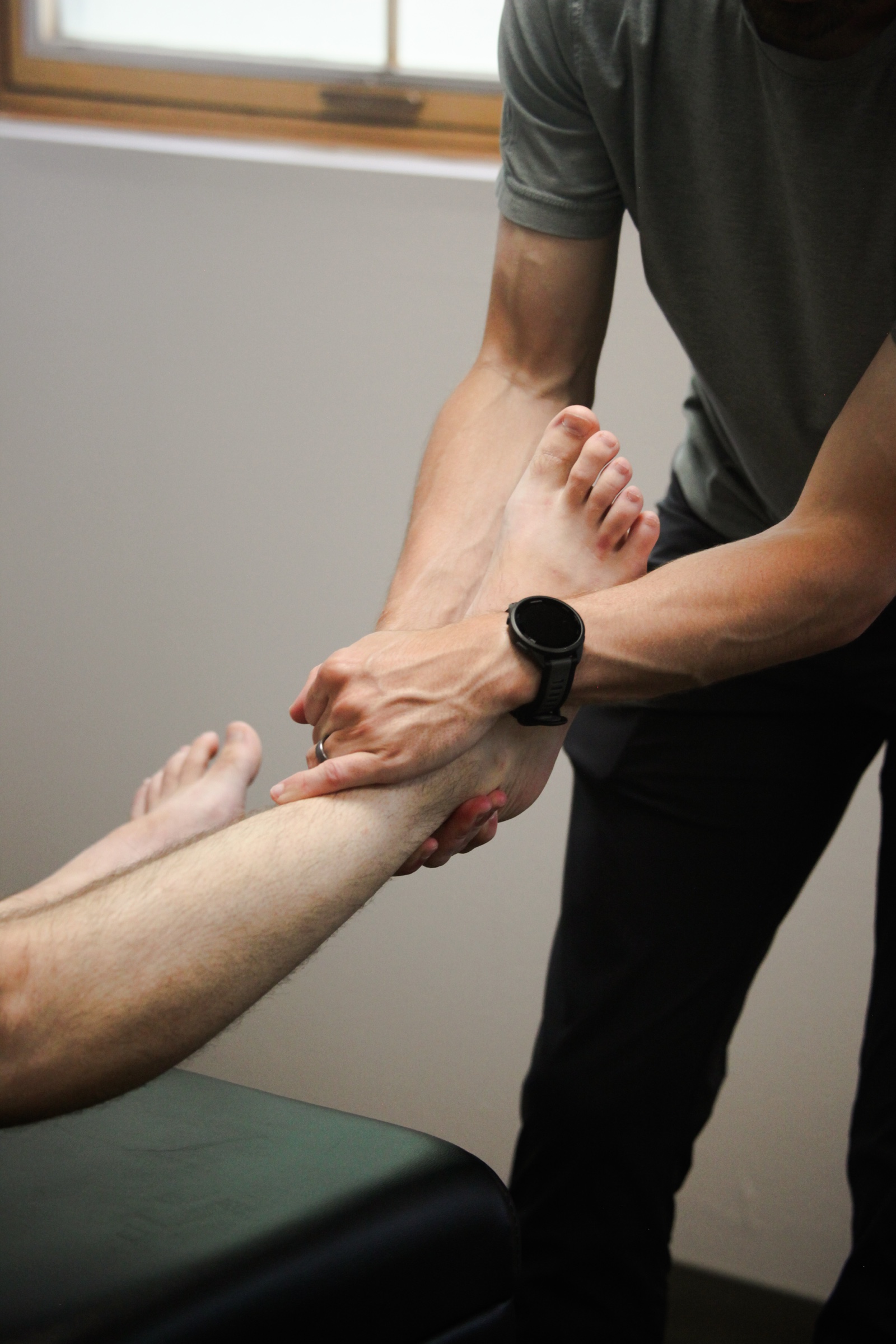
This is the part that surprises people most. Chiropractors adjust far more than the spine. Shoulders, elbows, wrists, hips, knees, ankles, and feet are all joints, and they stiffen up the same way the joints of the spine do.
It matters because problems travel. A stiff ankle changes how your knee and hip move, and that can show up as back pain. A stiff upper back forces the shoulder to make up the difference. A lot of what looks like a back or neck problem is getting help from somewhere else, which is exactly why I check the joints above and below where it hurts. The ankle is the classic example, and I go through why in ankle mobility exercises.
Soft tissue work on the muscles around the joint
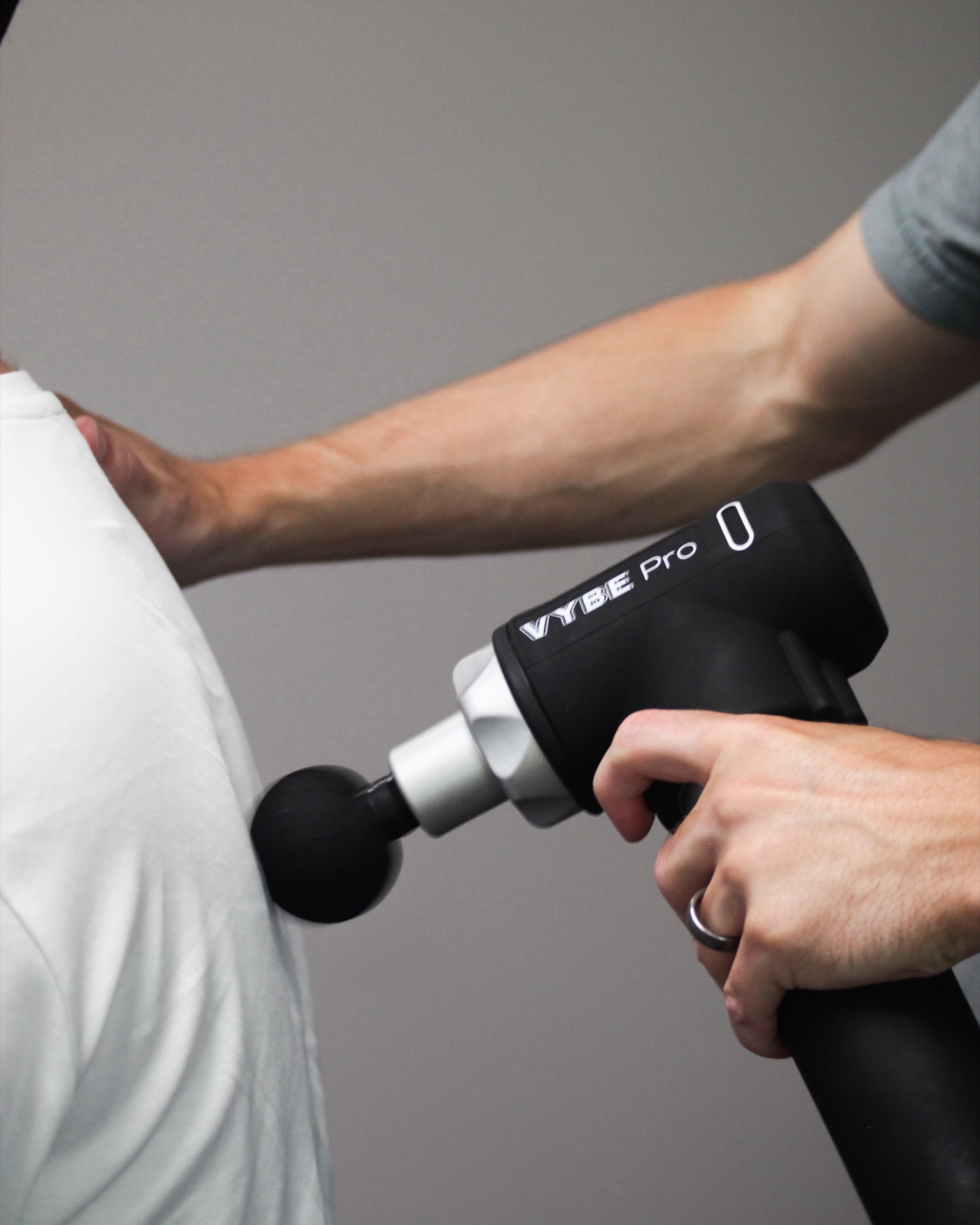
Joints do not stiffen up on their own. The muscles around them tighten and guard, and if you only adjust the joint, those muscles can pull it right back to where it was.
So most visits include soft tissue work. Sometimes that is with my hands, working on a specific knot or a band of tight muscle. Sometimes it is with an instrument or a percussion device, which lets me work deeper and faster across larger muscle groups. It feels a lot like a firm, targeted massage, and it often makes the adjustment that follows easier and more comfortable.
Rehab exercises and a home program
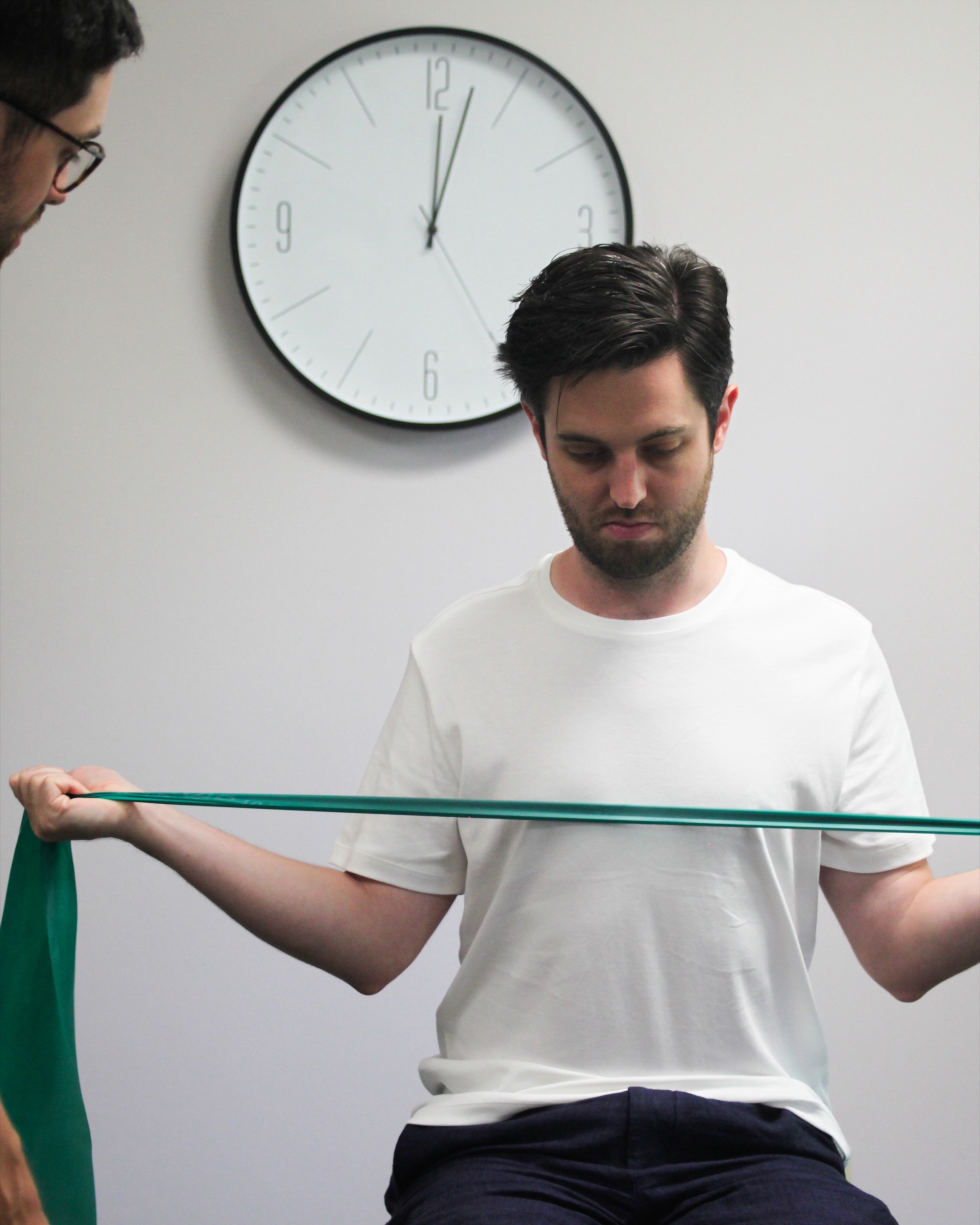
This is the part I care most about, because it is what keeps you from needing me. An adjustment buys you better movement for a while. Strength and control are what make it last.
Almost everyone leaves with a few exercises. Usually two to four, chosen for your problem, done in a few minutes a day. We go through them in the office first so you know you are doing them right, and then we build on them as you improve. For athletes this becomes real rehab: getting back to running, lifting, or playing without the injury coming straight back.
The evidence here is consistent. For most back and neck pain, staying active and building strength does more over the long run than any passive treatment, mine included. My job is to get you moving well enough to do that.
Care adapted for athletes, pregnancy, kids, and older adults
The core toolkit is the same for everyone, but some groups need it adapted.
- Athletes and active people. Sports injury rehab, warm up and mobility work, and getting back to training without rushing it.
- Pregnancy. The body changes fast in pregnancy, and lower back and pelvic pain are common. Adjustments are adapted to the stage of pregnancy, with positioning and techniques that keep you comfortable.
- Kids. Care for children is gentle and age appropriate, and it looks very different from adult care. It involves far less force than most parents expect.
- Older adults. Gentler techniques, more emphasis on balance and strength, and more attention to bone health.
Advice that outlasts the visit
A chiropractor should also be asking about the rest of your day. How your desk is set up. How you sleep. How you lift your kids or your groceries. What to keep doing at the gym and what to drop for a few weeks. None of this is glamorous, but small daily habits are often what caused the problem, and changing them is what keeps it from coming back.
What a chiropractor does not do
It is just as useful to know where the line is.
- No medication or surgery. If you need either, I will tell you and point you to the right doctor.
- No treating problems outside the musculoskeletal system. Infections, organ problems, and chest pain are not chiropractic problems.
- No pretending everything is fixable with an adjustment. If your exam suggests something that needs imaging, a specialist, or a surgical opinion, I will say so and refer you on.
I also do not offer every treatment out there. For example, I do not have a decompression table, and I explain why in what is spinal decompression. Referring out is not a failure. It is part of the job.
Some symptoms need a medical doctor first, not a chiropractor. Numbness around your groin or buttocks, new trouble controlling your bladder or bowels, back pain with a fever, unexplained weight loss, or pain after a serious fall or accident all warrant urgent medical attention.
Is a chiropractor right for your problem?
A chiropractor is a good first stop if you have:
- Back or neck pain that is not getting better on its own after a week or two.
- Pain that runs down a leg or arm, like sciatica, without the warning signs above.
- Headaches that seem to start in your neck or upper back.
- A stiff joint that limits how you move, train, or work.
- A sports injury you want to rehab properly instead of just resting.
- Back or pelvic pain during pregnancy.
If you are still not sure, that is exactly what the first visit is for. I explain how first appointments and follow ups run in what a chiropractic appointment looks like.
If any of this sounds like you, give us a call at (913) 400-2014 or book online. Tell me what is going on, and I will tell you honestly whether I can help.